• Home/Blog
  • Podcast
  • About
    • Contact
  • Portfolio
    • Advertising
    • Strategy
    • Taglines
    • Filmwork
  • Subscribe
  • search

Amy Swift Crosby

the story is in the telling

Big Brands

Regular.

November 21, 2017 · By Amy Swift Crosby

One of mine.

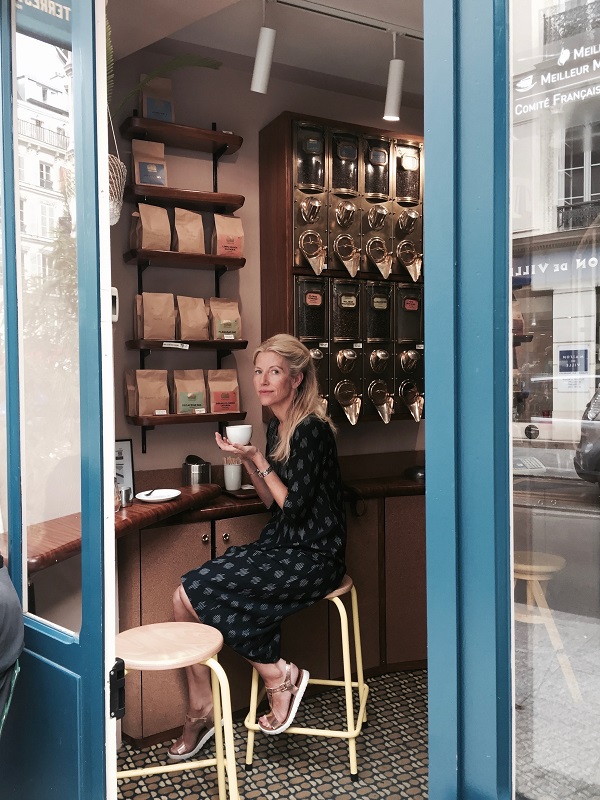
When we hear the word “regular” most of us have the same idea of what that word means; it’s the normal, typical, consistent and most common. It also signals the kind of customer most people want to have.

But at Dunkin’ Donuts, it has an additional meaning — which is, coffee prepared in the way that is most often ordered. It’s not on a sign or menu anywhere, but serves as short-hand for ordering coffee “with cream.”

Good Taste Committee (and nutrition) aside, Dunkin’ Donuts is an unexpected case study in belonging. No matter what you may think of it, it is easy to recognize a Dunkin’ insider and understand what is important to them.

Dunkin’ Donuts opens at 5am, which tells you a lot about who needs coffee before the sun comes up (fisherman, students, landscapers, construction personnel, farmers, housekeepers, Wall Street traders).

Regardless of your order — egg sandwich or combo-pack – nothing takes more than 2 minutes to assemble. Which is about how much time regulars devote to breakfast. They usually eat it on the run, and Dunkin’ makes that possible.

Most franchises have a combination lock on the bathroom door, memorized by anyone who frequents that location. It rarely changes, so if you have to ask…you’ve identified yourself as a guest.

All locations brew a stronger-than-expected drip coffee that has surprised many of us who frequent non-franchised, more expensive, beaker-wielding establishments. The Dunkin’ customer wants a legitimate coffee, a consistent experience, and is more than happy to skip the baristas / bells and whistles.

Dunkin’ Donuts isn’t in my usual rotation, but when I find myself inside one (a reality of New England life), it’s pretty obvious who’s a visitor, and who belongs. I love how there’s always a couple of retirees in the corner, shooting the shizzle, or a postman standing next to a CEO; or a college student with her immigrant mother. The brand isn’t positioned around a socioeconomic group. Rather, it’s targeting a tribe with a shared affinity, despite its differences.

When I am there, I always kind of wish I was a regular.

I’d like to think that this desire to belong is a refreshing measure of a brand’s success. Whatever you may think of a place, and demographics aside, it’s interesting to notice that what unites our fans and followers can sometimes be surprising, and more revealing than any hard data.

Recognizing belonging — where you yourself are a regular – feels like a worthy step toward creating those places for others.

Big Life

Equal.

November 14, 2017 · By Amy Swift Crosby

@jodiepatterson

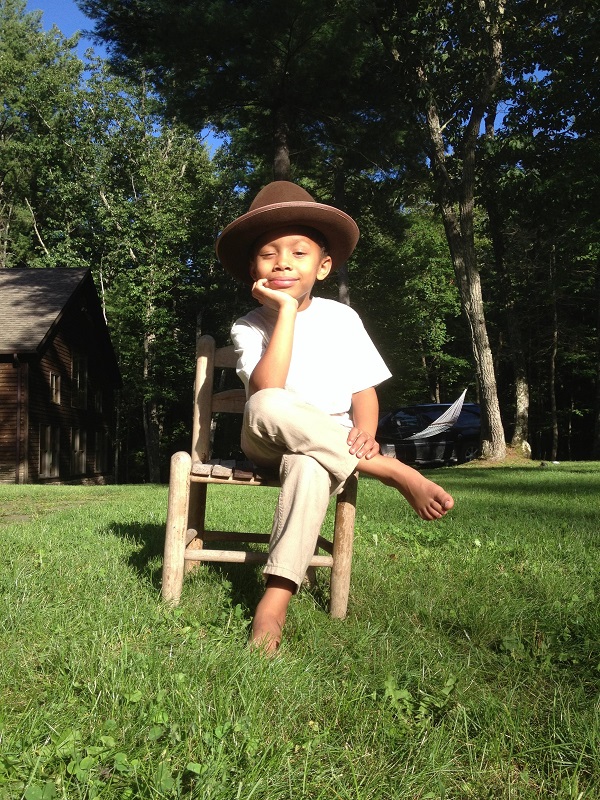
Will this boy, Penelope, have a say?

A long one today, friends.
Stay with me.

I’m worried about…
“The future is female.”

We saw this on handmade signs, bumper stickers and in many of the optics surrounding the women’s march and post-election speech. Now, it’s grown into an active hashtag across social media, whenever anyone wants to promote a women’s issue/business/perspective or vibe. It has become shorthand for “this is a woman thing.”

It gave me pause then… and still does.

I remember the moment I saw it on the t-shirt worn by a little boy. His mom was holding him and I wondered if and how she explained that message to him, and…what might he think when he’s old enough to know what it means?

I’m pretty sure I know what we/they are trying to say, which is, “the future includes more womens’ voices – at the top — and everywhere.” Yes! But words are a big part of my world, and the world, and a slogan such as this isn’t actually saying what it needs to say.

It reminds me of a typical advertising device. Marketers will often go with a tagline or message because its alliterative, more than it is effective, because it sounds good. It might seem like it works, but upon closer examination…it doesn’t actually say much.

Sure “The future is female” has a good ring to it.

But do any of us want to live in a world dominated by one gender? Isn’t that what we have now?

Ironically, I think this future female rallying cry reflects a relevant blind spot.

For movements to create impact and change, they often have to swing much further into one direction, only to be able to land somewhere in the middle. I would never diminish the bravery and hard work of the activists who led us to where we are in 2017. But I wonder, with all that is in the news cycle right now, if the narrative is inadvertently creating a similarly binary conversation — and vilifying men — while ceremoniously vindicating (all) women.

The future is (hopefully) a safe place for everyone — a girl who wants to be a boy, a boy who doesn’t identify with either male or female, a girl who has to summon the courage to say “stop, this isn’t right” and a boy who wants to tell his dad that something happened — but he’s too ashamed to say it.

Could it be that what we really mean is that the future is a place where all voices are represented?

As long as we continue to create dynamics that pit one group over another, where one matters more, gets more air time, dominates an industry… we will have the oppressed and the oppressors.

Historically, we’ve accepted two options, which is why it’s hard to see past this right now:

Black / white.
Republican / democrat.
Up / down.
Male / female.
Rich / poor.

If we discount men, we undermine our ability to build a better future with men (and anyone who doesn’t identify with female). Men (news flash) are an essential part of our world.

Some men have created great pain and suffering.

Some women have been the victims, and will be forever changed by their experience.

And even more people have been silenced for their inconvenient truths.

When we talk about empowerment, and bringing more women into positions of leadership, across every industry and governmental branch, let’s also remember that most men (who were once someone’s little boy) can hear us — and must hear us. So let’s say something that shows them what our experience and leadership looks like.

It’s not binary.
It’s inclusive.
It’s not me over you.
It’s us.

Maybe a better slogan would be “the future is equal.”

As a copywriter, I can’t say it’s as viral.

But as a person, I think it says more about our shared vision.

To see Jodie Patterson’s TedX Talk about raising her transgender child Penelope, click here.

Big Life

Knowing.

November 7, 2017 · By Amy Swift Crosby

@theleahforester

A very dear friend recently revealed an inappropriate encounter she had with a well-known Hollywood agent in a New York Times article. In the piece, she recounted that after the “incident” itself, she attended a party at the offender’s home the next day. This fact alone, the agent’s lawyer argued, implied that the encounter was “consensual.”

This conclusion misses The. Entire. Point (conveniently.)

What our culture has yet to understand is the length that women go to, to make others feel at ease, to reassure… to convince ourselves (as much as the other) that there’s “no problem here.” We sacrifice our own integrity, our voices and even our safety to avoid confrontation or cause upset. We protect the reputations or feelings of those who may have a lot to lose by hearing our truth.

These revelations of predatory, offensive behavior and work environments that condoned it are just the beginning. And my prediction is that we will soon hear from many women in many industries with similar experiences of sexual harassment. But there is something else I hope this consciousness shift will accomplish, even beyond the current (and much needed), sexual nature of the conversation.

It’s time to stop worrying that we’ll make someone uncomfortable.

We accommodate, so often, because it too disruptive or embarrassing to do or say the thing that needs to be said. We take one for the team, because maybe that’s just easier. We’re strong. We can live with it. It’s not that bad. “I’ll go to his party/return the call/nod and smile… so they don’t think I’m upset. I’ll just make it okay.” Or with other women, “She has it worse than I do. I won’t rock the boat. If she does it again, I’ll say something.”

But at what cost? It does cost something.

The truth is disruptive. It’s not cozy, safe or comforting.

The author Liz Gilbert recently told me (and 200 other women), to “start knowing.” It was in the context of asking permission, and resisting what we know we already know — but refuse to own.

It’s a big ask, because knowing can also mean taking on more responsibility, having to take action, or exposing what scares us.

A few days ago, standing in line for ice cream, a very large man stepped in front of three of us – my young daughter, a teenage girl who was in front of us, and me. As he stood there for a few minutes, I realized that he had cut the line — perhaps without realizing — although it couldn’t have been more obvious. The teenager looked uncomfortable, and my daughter questioned how he could do that.

“Excuse me, sir. The line starts back there,” I said.

He shuffled behind us, mumbling something under his breath, but the teenage girl looked at me and said, “thank you for saying something.”  It was at that moment that I experienced a shift. The smallest acts of knowing, of using our voices, of encouraging others to speak up over even the smallest, most transactional infraction is worthwhile. What so many of us might think of  as inconsequential — just an everyday exchange — is actually the practice it takes for those watching to prepare for what lies ahead.

We have to show ourselves, and our children, what it looks like…to know.

Big Life

Frequent Finish Lines.

October 31, 2017 · By Amy Swift Crosby

There’s a big difference between…
Writing a book and publishing a blog post.
Running a 5k and finishing a marathon.
Climbing Kilimanjaro and taking a day trip up Mt. Washington.
 
Our world has become ever more crowded with ambitions of every sort, with social feeds detailing the enviable evidence of our friends’ (and their friends’) milestone feats — that it can sometimes have a defeating effect. “I’d have to train for months…to have a big idea…to quit my job…I’ll do it next year…I’d need a partner.”
 
In an evolutionary world, it only makes sense that people are doing more and bigger stuff all the time, right? The minute one person does anything — much less better, faster, or longer – 20 more succeed in breaking those barriers.
 
But big accomplishments are few and far between. They’re promises worth keeping to ourselves, without question — but to overlook smaller dreams — or dismiss them as a distraction, unimportant or trivial –  is to miss accessible opportunities to make meaningful dreams come true.
 
Indulge me on this one.

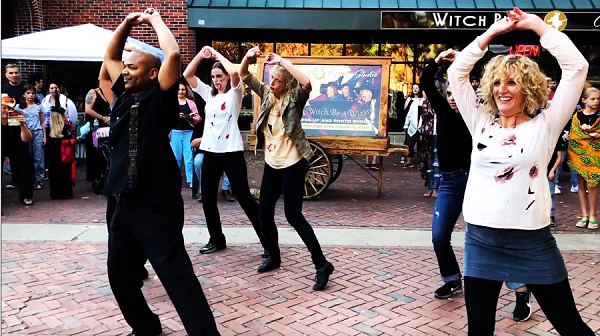
I recently set my sights on learning Michael Jackson’s Thriller dance in two weeks. This was not without sacrifice. Over the course of my 14-day mission, I set aside some important work, made less interesting dinners, commuted in rush hour traffic, and dropped one ball in the form of a missed meeting. But…it was a short-term goal that felt semi-realistic, and that meant I finally (kind of) felt like a legendary pop star who I must have watched on MTV 100-plus times as a kid. Looking at my life, which admittedly doesn’t have a lot of room for “more”, this actually seemed do-able.
 
And it was… So. Much. Fun.
The learning.
The practice.
The performance.
All of it.
 
Grand finish lines are wonderful, but they aren’t the only goals worth having.
Of course you should write a book, renovate a house, get a degree, pitch the show,  launch the podcast and sell the business. But you could also take the class, do the gig, submit the work or enter a smaller, local race.
 
More frequent finish lines are everywhere.

They aren’t without effort, intention, and logistics. But they’re within reach.
 
And what they might deliver is a reunion with the kid inside who still wants to feel giddy, nervous and beside herself with excitement. This kind of glee can’t be manufactured. But it can be cultivated.
 
Look around.
Decide on your “yes” thing.
Punctuate the finish with a date, a registration, an unveiling, or by pressing send…
 
And then…do it.
 
Mama-say-mama-sa-mama-coosa!

Small Business

Copycats Part Deux.

October 24, 2017 · By Amy Swift Crosby

Could I get that recipe... please?

Last week’s post acknowledging the frustration of seemingly being imitated in the marketplace spawned an unusual amount of mail in my inbox. People have a lot of feelings about this topic. I think it actually goes even deeper than my original conclusion.
 
Here’s the thing.
 
Often in life, people ask …
 
Who does your hair?
What’s that recipe?
Where was that vacation?
Who designed your house?
Where did you buy that?
 
And most of us are only too happy to share our good finds with friends. But all of that changes when you suddenly run into those friends during Spring break at your secret little spot, or when they make a habit of bringing your signature chocolate chip cookies to Book Club, or they suddenly have your wardrobe. It’s just awkward. And weird. Not because they acted on your recommendation, but because they missed a critical element in the currency exchange of shared resources: acknowledgment.
 
How about checking the vacation dates?
Or citing the source?
And running it by… if it’s gonna be exactly the same?
 
It’s funny how a simple nod or inclusion in the process changes the dynamic entirely. It’s also interesting that when it doesn’t happen, you get a lot of insight about someone’s level of (or lack of) awareness.
 
It’s easy to diminish this stuff as unimportant or trite, but at the heart of any sharing of information is a sense of pride in having discovered/perfected/cracked the code of said thing.
 
Is it worth deep introspection? Probably not. But, it is nice to get a little credit when a personal rec has clearly been applied and deployed. But what’s even more valuable is to notice who gives a high-five (publicly or otherwise), and who does not. It can inform future decisions, and open the door to what else this person overlooks/presumes/takes for granted.
 
I don’t think any of us aims not to be generous or to see the worst in friends, but there’s something to be said about the art of selective reveals.
 
A simple “Oh, I don’t use a recipe — it’s an ad hoc salad,” should do the trick.

Small Business

Copycats.

October 17, 2017 · By Amy Swift Crosby

I recently came across a newsletter style blog, similar to what I publish here, penned by someone I worked with in the not so distant past. There was a strange similarity to it — with some of the tics, cadence, and themes, that I recognize in my own musings.

At first, I was shocked.
Then, annoyed.
And after that, I am pretty sure there was some eye rolling and judging on my part.

Feeling copied does not bring out the best of me, or anyone, really.

At around this same time, a ceramicist friend whose work has a recognizable color, shape, and stripe, had a similar observation. He questioned whether his signature style had been channeled by a much more famous studio mate.

Another former colleague discovered the entrepreneurial network she founded being duplicated by a former member.

And for anyone who makes and distributes products, you’re used to getting knocked off. But it doesn’t change how deeply irritating it is when it happens.

When words, ideas, a product or style feel co-opted — used by someone else for profit — it burns in the belly. Those on the receiving end want justice and credit. Our desire to right the wrong can produce feelings of preparing for battle or at the very least a child-like tantrum, though neither deliver a very satisfying resolution.

So assuming legal issues are not at stake, and the knocker-offer didn’t violate a patent, what can we really do when we see a version of our work, authored by someone else, in the marketplace?

One option is to quietly seethe, become resentful, grow-chip-on -shoulder, blame your failures on other people, and otherwise shrink into a person you wouldn’t be friends with…much less want to become.

The other is to get curious. Why was I inspiring to them? Why does it feel like me or mine…and could it simply be that he or she is tapping into the zeitgeist? A coincidence? What is this triggering in me… my ego, image, fear of losing customers… or is something else at stake?

A different option comes courtesy of Marcus Buckingham who, in response to discord, says:

“Assign the most generous possible explanation, and then believe it.”

It’s possible that copying you was the closest this person could get to creating something worthwhile. It’s also possible you’re wrong about any number of theories.

It’s hard to trace the lineage of an idea, and even when we do, there’s often not much we can do about owning it. But what we can do is shine like the crazy diamond we each are, and decide that there’s enough to go around. And then believe it.

Karma will likely take care of the rest.

Newer Posts
Older Posts

[insta-gallery id=”1″]

About Me

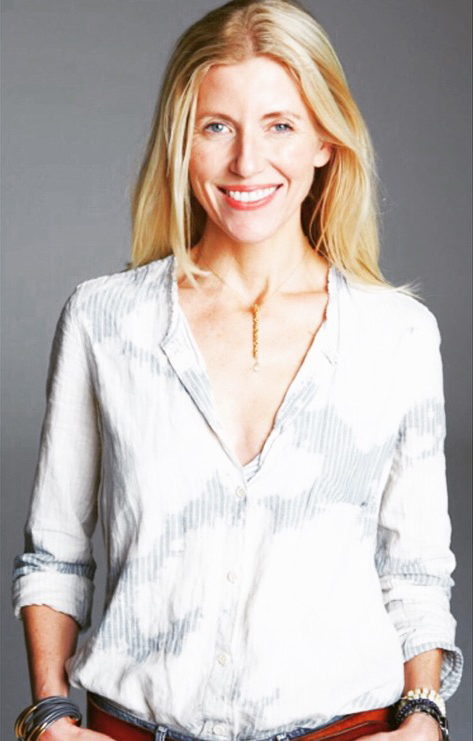
photo of Amy Swift Crosby

I’m a brand strategist and copy writer. I mostly work with partner agencies or directly with the leadership or founding team at a brand. My primary mission is to connect design and messaging solutions to business missions. I work with start-ups and Fortune 500 companies, across beauty, hospitality, wellness/fitness, CPG and retail. This blog reflects my personal writing and explores our humanity – often as it relates to work, space, time and language. You can review my portfolio here or connect with me here.

Photo - Andrew Stiles

The Brandsmiths Podcast


Brand Strategists Hilary Laffer and Amy Swift Crosby tackle business questions with candid, (mostly) serious and definitely unscripted workshopping sessions. Guests – from small business owners to CEOs, executive directors and founders – bring their head-scratchers, hunches and conundrums to Hilary, the owner of a boutique creative agency in Los Angeles, and Amy, a copy writer.

Search Posts


Latest Posts

  • The Last Time.
  • Barefoot.
  • Mileage.
  • Everything.
  • Eddy.


Copyright 2025 Amy Swift Crosby