• Home/Blog
  • Podcast
  • About
    • Contact
  • Portfolio
    • Advertising
    • Strategy
    • Taglines
    • Filmwork
  • Subscribe
  • search

Amy Swift Crosby

the story is in the telling

Small Business

Left Out.

April 24, 2017 · By Amy Swift Crosby

Remember the days of playgrounds, spiral notebooks and late bells, when a good day at school was feeling part of the group, and a terrible day was feeling like a third wheel, like everyone was “in” — except you? Not much has changed.

I was part of getting an idea off the ground not too long ago, and had to step away from it for a variety of reasons. When the project gathered momentum, and began to take flight, it was hard to watch. I was no longer its guardian, and although I can see why my attention needed to be elsewhere, I’d be lying to say I felt fine about it. I don’t totally (quite yet.)

Feeling “out” from any community, project or business can still feel the same, no matter your spiritual evolution or life experience. Unlike being a kid, as an adult you have perspective and other tools to lean on if it happens. But it’s amazing how quickly it can take you back to those formative years, and reignite old pathways you assumed were healed.

Just like there’s no other way to get over most things than to walk through them, when you sense you’re being left behind – or pro-actively need to shift your gaze — the fastest way through it is to say the thing you can’t imagine verbalizing to other people.

Why? Because the inner conflict of feeling bad about it, and telling yourself you don’t feel that bad about it, is kind of worse than the situation itself. It’s denial (and you know it). It’s inner-marketing, the most deceptive kind of sales pitch. It’s host on host, you vs. you. And the stories we tell ourselves, and pray that we can stand to believe, are far worse than the “spin” we might tell others.

Find your ally in the group, someone you trust, and who knows you. And then say it. Say the thing you don’t want anyone to know.

“I feel left out of this.”

Nothing may need to change (as in my case). Or something might. But you’ll free yourself from a half-truth that will eventually have an erosive, self-defeating effect.

The solution starts with you. Not them.

Small Business

Deference.

April 17, 2017 · By Amy Swift Crosby

Having just blogged about collaboration, the time felt right to look at the flip side of that coin, a no-man’s land I call dilution. This is when something is made weaker in direct relationship to the amount of collaboration and input. This could also be called, too-much-of-a-good-thing-becomes-a-no-thing.

When work product is presented to clients / co-workers / partners who are asked to reflect on it and provide feedback, most of us are accustomed to making modifications or even going back to the drawing board if we got it wrong. But what I’m seeing more is this compromised version that is somewhere in between tweaking and starting over. Besides being frustrating, it risks losing the big idea all together.  It’s the never-ending editing, change-tracking, re-writing and feedback loop that in the end, amounts to something entirely different than the original concept.

You have to ask — when should we each stay on our own mat? Do we all have equal say in every matter? Are all votes equal? Does having an Instagram account make you an art director? Does a Cross-Fit membership make you a fitness expert? Does the ability to write — and know your own mind — make you a copywriter? Does picking a web template make you a graphic designer? Does your boyfriend-developer make you a UX pro?

The unfortunate result of over-collaboration is that ‘the work’ gets diluted. It becomes a different species, not a related family member. And, instead of an exuberant, optimistic team, you have an apathetic one who feels undermined and (really) frustrated with an ineffective, mediocre, unrecognizable thing.

Experts are hired or assembled for a reason. They can be utilized, or they can be overruled…but not at the same time.

De-fer-ence: To give humble submission and respect. A definition (and a request.)

Big Brands

Triggers.

April 10, 2017 · By Amy Swift Crosby

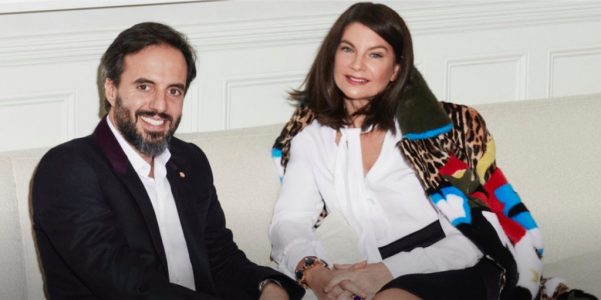
Natalie Massenet, founder of Net a Porter, with her new Farfetched partner.
Image Courtesy: Farfetched

I’m (so) not enough.

Why aren’t I achieving more?

Maybe I’m lazy.

Or… just not as smart / good / connected.

What the WHAT is this lovely (hideous) and supportive (diminishing) self-talk? Oh, it’s mine, actually. I found myself thinking this as I read through a WSJ profile on the founder of one of the biggest ecommerce / fashion platforms that ever was — and her new venture.

Is there someone who has this effect on you? Every time I read about the ever-inspiring Natalie Massenet, some kind of inadequacy alarm goes off inside me.

Maybe it’s because she was a writer/ editor / content maker, like me, but ascended it.

Maybe it’s because I knew her 15-years ago. She seemed smart and cool but not like the head of a fashion empire or a digital genius (which means it’s about hard work, nothing more or less.)

Or, maybe it’s because she was paid $150 million for her start-up. And that is depressingly awesome.

At the root of it is little to do with her and more to do with what she triggers for me, and what each of us needs to answer for ourselves:

Am I being true to what I want to do / build / offer to the world?

Triggers bring on existential angst, for so many reasons.

But hopefully you recognize yours, as I recognize (and hereby confess) mine, which is half of getting over them. But I’m thankful for her existence and frequent reminder of what I’ve done, not done, and still want to do.

Even though she really does get me every time.

Big Life

The Ask.

April 4, 2017 · By Amy Swift Crosby

Some people really know how to ask for what they want. Courtesy Universal Pictures

No one really teaches us how to ask for things (I just realized.) When you’re a kid, you’re supposed to put a “please” in front of your questions, but that’s about all the training we get. Women, in particular, haven’t had a lot of conditioning in asking for what they want or even what they need. Many of us know what we want, but do not know how to ask for it.

This muscle was put to the test recently when I started a personal project that includes asking for something from a few women I really admire, who are really busy, and who don’t have time for much extra — to do something for me.

What if they say no?
Or worse, what if they want to say no, but don’t know how?
Or maybe the worstest — what if they just say nothing?

The art of asking comes down to being specific about why someone’s input / contribution / introduction — whatever — is so important to your process. The more you can shine the light on why her, why now, why for this — the more likely she’ll see her power in changing your life, and…say yes.

So that’s what I did. And yes, they said yes! #yassss

Now, can I ask you for a favor? You can help me with this project by following @smartypeopleblog on Instagram, because followership matters to the gatekeepers-that-be.

Since you are the ones who have made this blog popular and viral and known to women from Poland to Paris to the Palisades, I think you are also the ones who will help move it to the next iteration.

Thank. You. So. Much. !!!

Xo

Amy

Small Business

Room.

March 28, 2017 · By Amy Swift Crosby

Spacious (actually) starts on the inside.

Actors have agents.
CEO’s have assistants and VP’s.
Celebrities have PR people.

But most of us don’t have these human filters that tell us what’s important, who needs a meeting, who doesn’t, what favors should we do or not do. So we have to prioritize them ourselves. Fair enough.

We know we have to say “no” when we want to make something big — to write a book, complete a project — we accept fewer invitations in order to focus on milestones. That obviously makes sense. But what I’m more interested in are the transitional moments that might seem unremarkable — but that are meaningful all the same — that you can’t plan.

I always notice that when my work schedule is back to back, I can’t even imagine new business ideas much less recognize them if they knock on my door. And I also miss tiny, unexpected moments; my kids’ sharing a story before bedtime or a concern expressed in the car on the way to ballet. When every minute is accounted for, there’s no room for unexpected loveliness.

It’s the same rationale that a swanky restaurant employs by (secretly) keeping a VIP table open. They want the ability to say “of course we have a table for you, Mr. Clooney,” (should he walk in). But that’s intentional. Planned. Anticipated. Some “no” had to happen for that table to be available.

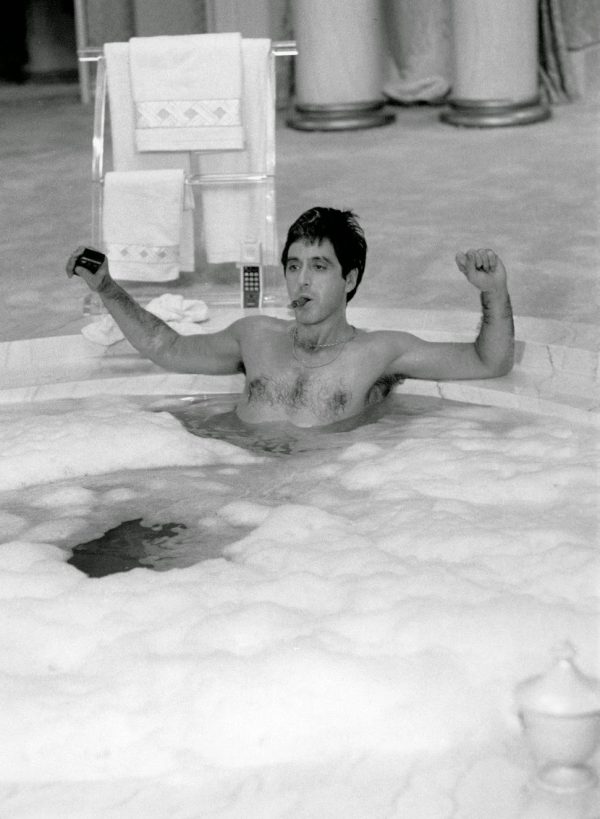
There’s a difference between what you know you want, and the things you can’t predict you’d hate to miss. Could be a dream opportunity, or a bath instead of a shower.

Create space. Make some room.

Big Life

Generous.

March 21, 2017 · By Amy Swift Crosby

You don't have to be a sadhu to be surprisingly kind. Photo @Jenniferromans

This is a story about the (surprising) gestures of others, and their lasting impact.

When I first got out of college, I worked at CNN, as the assistant to a very visible VP. While he was away at a European bureau, my (new) used car caught fire while I was driving it, melting the gasket. I was new to Atlanta, to my job and company, with no real friends yet  – working with a limited budget — and had to quickly solve how to get to and from work every day. In 1994, you bought a car through classified ads, so most of these negotiations took place on the phone.

One day, as I zigzagged between mechanics reports on the fax machine, printing insurance documents, my busy phone bank, and a mess of papers accumulating on my desk, a nearby manager – who also reported to my boss – came by my office. She admonished my use of work hours for “personal calls” and informed me that she’d be taking it up with the boss. I was distraught, embarrassed, and unsure of what side of “right” I was on. If I was out of line, I wanted to volunteer that information myself, rather than get reported by Lady Blah Blah.

When the VP called from London later that day — back when long distance calls sounded crackling and distant — I relayed what had happened (and was so nervous that I started to cry). The first thing he told me to do was go into his office and shut the door. Saving me from office humiliation with this gesture was my first surprise.

Next, after hearing me out, and having actually already gotten an email from the ambitious manager, he said, “I got her email, but I trust your judgment. Take care of your situation, do your best job, and let me know how I can help you when I get back.”

This guy – in the midst of the Gulf War news crises — could have fired me, or at least leveled me before moving onto more pressing tasks. But he gave me the benefit of the doubt — an unproven 22-year old, and definitely the least important person there. I’ll never forget how that felt, and how it changed how I trusted myself.

We likely don’t realize how our (re)actions or words impact people for years to come, and how impressions make a lifelong mark. I could have shared a negative story to illustrate this same point  — because there are some (juicy ones) that stand out. But I wanted to share this one because we all have a choice when we react, and inside the hours of any given day, get unexpected opportunities to make one.

It doesn’t seem we can lose by choosing generosity.

Newer Posts
Older Posts

[insta-gallery id=”1″]

About Me

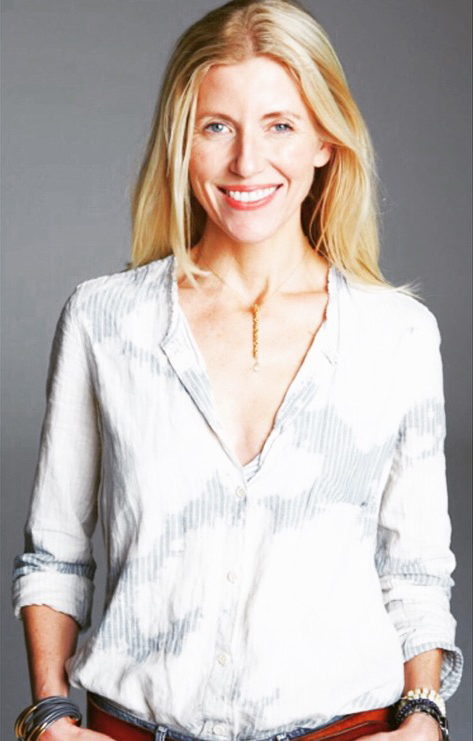
photo of Amy Swift Crosby

I’m a brand strategist and copy writer. I mostly work with partner agencies or directly with the leadership or founding team at a brand. My primary mission is to connect design and messaging solutions to business missions. I work with start-ups and Fortune 500 companies, across beauty, hospitality, wellness/fitness, CPG and retail. This blog reflects my personal writing and explores our humanity – often as it relates to work, space, time and language. You can review my portfolio here or connect with me here.

Photo - Andrew Stiles

The Brandsmiths Podcast


Brand Strategists Hilary Laffer and Amy Swift Crosby tackle business questions with candid, (mostly) serious and definitely unscripted workshopping sessions. Guests – from small business owners to CEOs, executive directors and founders – bring their head-scratchers, hunches and conundrums to Hilary, the owner of a boutique creative agency in Los Angeles, and Amy, a copy writer.

Search Posts


Latest Posts

  • The Last Time.
  • Barefoot.
  • Mileage.
  • Everything.
  • Eddy.


Copyright 2025 Amy Swift Crosby