• Home/Blog
  • Podcast
  • About
    • Contact
  • Portfolio
    • Advertising
    • Strategy
    • Taglines
    • Filmwork
  • Subscribe
  • search

Amy Swift Crosby

the story is in the telling

Chief.

June 21, 2016 · By Amy Swift Crosby

Chief Product Officer.
Chief Creative Officer.
Chief Executive Officer.
Chief-of-Everything-Officer

As business owners, we are all chief of something (many of us the latter.) But how many of us assume certain issues are just “part of being in business,” or “part of being the boss” or part of “working with people.”?

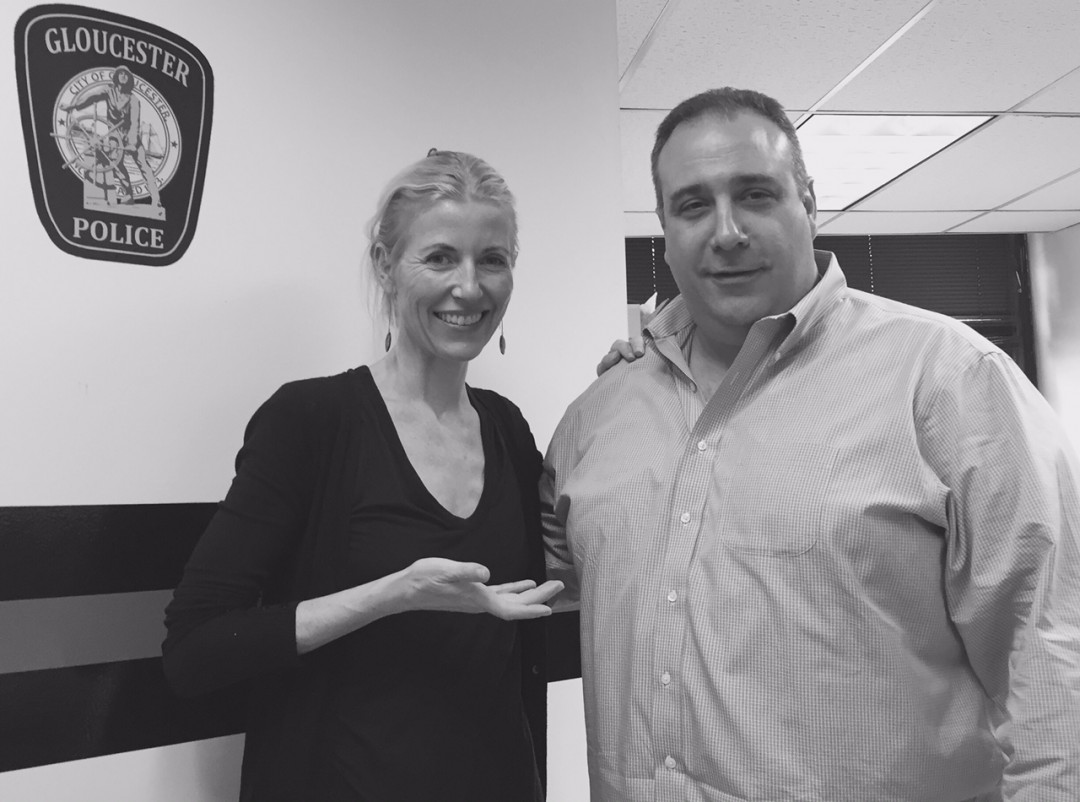
This short story is about a local Chief of Police who did an unusual thing: he stopped arresting drug addicts and started saving them instead. He changed the story on “it’s just part of being the police.”

As you can see from the news, this country has an opioid addiction issue. Heroin is rampant. Prince just died of a Fentanyl overdose. Where I live, on the north shore of Massachusetts, 4 people in the small town of Gloucester had already overdosed by the second month of last year. This police chief took a deep breath with that news – and decided to take action.

Last winter, he posted a message on Facebook that read:

“Any addict or dealer in Gloucester is invited to bring in needles and drugs, and turn themselves in, without arrest. You will be offered assistance and rehab, no questions asked.” His mission? Immediate and sustainable care for anyone who wanted it. He got 39,000 views from across the state and country.

I assumed before interviewing him that he had pre-organized beds in rehab centers and a volunteer program to assist – but guess what? He had no plan. No connections. No infrastructure. No volunteers. He said, “We had no idea what we were going to do. The solution came from putting out the message.” He took a leap of faith, got others involved in the conversation, and as a result – created a solution that involves volunteer “angels” who have helped build a model being adopted across the country.

A year and a few months later, he counts 120 police departments in 28 states who use his program, 300 treatment centers, 60 million dollars in scholarship funds – and 450 addicts helped through treatment. That’s pretty impressive for a village law enforcement officer. He’s been featured on NPR, in The New York Times, The Boston Globe – he’s a hero (who, by the way, gives most of the credit to his team. Of course.)

It’s easy to feel despondent about problems in our midst. I know I do – and it comes from not knowing how to help or how to change my own habits or how to move boulders up mountains and even how to communicate better. So often it can feel like its people who stand in our way or ruffle our feathers or make life harder, but often it’s a process or belief that has been allowed to proliferate. When teams flail or fail, something systemic happened…no one intentionally brings a ship down, right?

Here’s to arresting the problem, not the person. That’s the kind of Chief I want to be.
The Problem with Passion

June 14, 2016 · By Amy Swift Crosby

Never give up.
Just be yourself.
Go with your gut.
Just hang in there.
Follow your passion.
It’s meant to be.
Something better will come along.

Many of the monikers above are common refrains from the media, our friends, colleagues – the motivational posters you see at the dentists office. They just sound good, right?  The New York Times recently ran an article titled, “Be Yourself is Terrible Advice” based on the writers experience preparing for a Ted Talk in the Age of Authenticity. Is our collective agreement about what to do when you don’t know what to do…flawed?

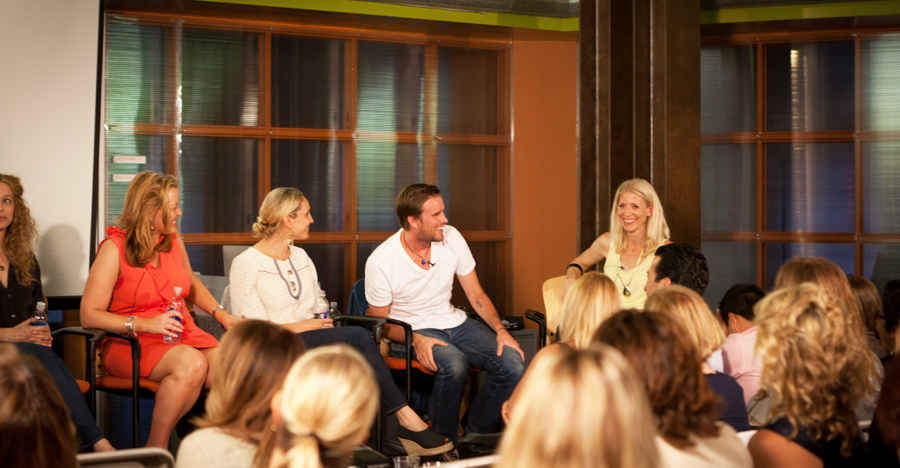
Back in the day, when SMARTY hosted monthly panel discussions with entrepreneurs, I asked each speaker to re-think any recommendations around “passion.” The majority of them were surprised at my request – which was – “It will be natural to tell the audience that they have to find their passion and follow it. And it’s not that this is untrue – but it’s not the whole story – and coming from you, it can’t be the pillar you hang your success on, because most likely, it isn’t.” Not one of them ever disagreed. Passion is part of it – but it’s nowhere near all of what keeps us going, builds a successful relationship, business, spiritual practice…

Passion waxes and wanes, and further, we’ve almost become anesthetized to the word’s potency. I would say find your compass is better advice – because it’s more closely connected to purpose. Your compass is a guiding North Star that doesn’t fluctuate based on fatigue, disillusionment, relationship or markets. It doesn’t rely on speed or intensity – just coordinates and direction.

And should you “Just Be Yourself”? – probably not. It’s not specific enough. What we think we’re saying is “don’t be someone else” which may have some merit. But to “just be yourself” doesn’t take into consideration the audience, the format, the end goal. It’s too vague. Which means it’s not that useful.

My favorite is “Never Give Up”  – because sometimes you should give up. Many of us are so committed to this idea that we never give up in the face of dozens of factors begging us to walk away. We don’t give up because that would be… “giving up”(bad!)….not because giving up is actually going to save us, heal us, create a better environment for success, give us our time back, our heart back; give our efforts a more fruitful outlet.

Question the common cliches. They carry some truth’s, some of the time, but they’ve been positioned as highest truth’s – and for that they are misleading. What we want are “laws” that govern a chaotic and unpredictable inner world – so we rely on these. But the better guardrails might look less like a tagline and more like a suggestion.

Maybe less “Just Do It” – and more –  “Let’s try this.”
Not as sexy. But your life isn’t advertising. So the copy doesn’t matter so much.

Ordinary.

May 31, 2016 · By Amy Swift Crosby

I caught a glimpse of my ordinary life the other day - thanks to filmmaker Eric Eason.

Too many options.
Not enough options.
We haven’t been paid.
We can’t pay them yet.
No one showed up.
No one signed up.
No one spoke up.
They never replied.
Not enough chairs.
It’s a Chinese holiday.
They missed the deadline.
No one can find us.
The link is broken.
Does anyone care?
I care too much.

These ordinary problems are the best kind of problems. They are small crises that pale in comparison to the bigger ones life can throw. Pema Chodron has this to say:

“The ordinariness of our good fortune can be hard to catch…the key is to be fully connected with the moment, paying attention to the details of ordinary life. By taking care of ordinary things – our pots and pans, our clothing, our teeth – we rejoice in them.”

I would add making the bed to her quote. For me, this simple, daily chore reminds me that I have room in my life and a healthy physical body that allows me to do something simple and meaningful – that closes my subconscious life – to begin the conscious one. We don’t have much control over what happens when we sleep  – however we can be awake, yet totally asleep.

Here’s to making the coffee! Mowing the lawn! Drop off! Pick up! Unsubscribes! Delayed prototypes! Overdue invoices! Legal bills! Bookkeeping snafus! Cash flow! Life is so good.


Over Everything.

May 17, 2016 · By Amy Swift Crosby

Over committed.
Over extended.
Over burdened.
Over invested.
Over stretched.
Over achieving.
Over done.
Over wrought.
Over selling.
Over reacting.
Over board.

These cycles can happen to the best of us. We get onto a freeway going the speed limit, and within weeks or months find ourselves on the Autobahn. 60MPH becomes 90MPH. Soon there’s no off ramp, because you’re so embedded in what you think you “have” to do, you forget where you’re even going. Soon, the hobbies and extras disappear from life – an hour of email on a Sunday turns into six. Work feels like it’s got you on a leash – you can bark or you can get pulled – but unhooking never crosses your mind. Whether we get addicted to feeling needed and necessary, or find ourselves drowned in “passion” projects that steel precious life real estate, or engage with clients who need more than they can pay for, there’s no good reason to feel busted at the seams. Correction – there is a good reason – and that reason is to see the ultimate failure in it, and to get your life back. It’s what Essentialist author Greg McKeown calls “protecting the asset.” That asset is you.

Yes, there’s so much to do.
Yes, you have so much potential!
Yes, they need you and want you and are likely better for having you.
But without you, there’s no to-do, potential, client, product, message…

This book came at the right time for me. If you find yourself over delivering, over and over, and sitting at your desk at some point feeling over it, it’s time to read this big little life saver.

I know, #Overkill. But truth.

See Me

May 11, 2016 · By Amy Swift Crosby

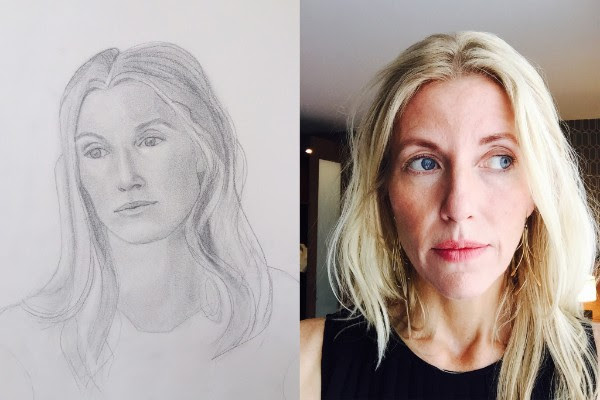
Some may see you in hand drawn black and white. Others in color photography. It's hard to control other people's mediums - which is why your own lens becomes very important.

When we feel invisible, in our work contributions, in our personal relationships, in our families, in our communities, as women, as mothers, as partners, as friends – it sucks (just to be really eloquent). There’s a rage, and then sadness, that comes from habitual invisibleness or insignificantness. Any time we don’t feel valued for what we bring, that yucky feeling translates across many platforms and manifests in funky ways. It might be a general cloud of negativity that dampens your magic. It could be overreacting to one thing when you’re really upset about another. It could be a vague malaise or fatigue or depression.  It can also look like constant complaints – suddenly, no one can make you happy because you’re unpleasable. The one thing you need fulfilled isn’t getting the light of day.

There’s frustration (and even indignation, or humiliation) when you give and give, and you give your BEST, and the people around you treat it like another Tuesday.

“We couldn’t do this without you.”
“Your work makes our work so much better.”
“You add so much to this team.”
“How do you do it?!?”
“Yes I’ll drop everything and come help you – that’s how much you mean to me.”

That’s what most of us simply need to hear. The overwhelming majority of us don’t need parades in our honor or cakes to celebrate how smart or brave or nifty we are. We just want the people we respect and love most to do one thing– see our worth, understand our circumstances, and act like it.

But you can’t make anyone do any of that. When it happens, it’s amazing, but in the meantime, try to take the time to count the ways that you impressed your own bad self. Stop relying on the world, a boss, a partner, a colleague –  to tell you. And take it ALL IN when someone you respect, notices. It’s not a cynical view, but when you stop looking for it, and start getting high on your own supply (if you will), it usually finds you.

#intrinsicrewards.


Conditions

May 3, 2016 · By Amy Swift Crosby

At the farmers market in my hometown, Eugene, Oregon a few weeks ago. Good soil. Wet weather. Love. You can see what good conditions produce!

One fantastic thing about aging – or really just the passage of time and the experience that comes with it – is how much we clearly see the conditions that support our success. You start to deeply commit to what it takes to be not just happy or successful – but actually effective.

This idea is easy to overlook. Conditions create the environments where you thrive, but can be easily ignored because they aren’t the “thing” themselves. They’re the supporting pillars for the “thing.”

Some examples here that are particular to me – and I’m sure an athlete, actor or CEO would have their own (very different) list.

Writing. I am on so many calls all week – which is part of my work – so I don’t nearly have the time to write that I used to. That means I have to create it – schedule days with no calls, no meetings. I protect these fiercely because if I don’t, I’m not as focused and good as I need to be. Saying no… in order to get to something right and good and persuasive – takes space.

Meetings. I almost always insist on an agenda (if I don’t see one in place.) An agenda-free meeting is one without the needed constraints to keep everyone focused and making decisions. Creating it or asking for it is an extra step that takes time. But without it…you have rabbit holes.

Media. I love reading, listening to podcasts, discovering new music, streaming TedTalks…all if it feels like fertilizing a garden of understanding the world, people, ideas. But not all of it. If I find myself deep into something silly – celeb gossip, Facebook, someone’s headlining misfortune – I try to move on. Not useful. Creates cobwebs. Dark thoughts.

Texts/Emails/Social: I don’t read email first thing in the morning, or during dinner with family, and I am completely out of the loop on viral jokes, and all the “things” that populate the internet for wow factor. This is because I guard my attention. I see how my device hijacks me. I feel this tension – and resist it as much as possible. It’s enough as it is!

Socializing: Once I learned that I’m actually an introvert (misidentified as an extrovert), I immediately understood why I regularly practice the Irish Goodbye at parties, and often leave an hour or two earlier than my husband. I have a certain social / party chatter tolerance – shorter than most, perhaps – which used to feel like a lack of endurance. But now I see that it’s my natural protection mechanisms kicking in – preserving physical and mentall space for my benefit. It’s a wall I recognize for it’s usefulness to my emotional hygiene.

What are yours?

Like everything, there are exceptions, and of course staying out till 3am is fun, and watching Jimmy Fallon’s “Ew!” is amazing, and catching up with a friend when you should be writing your book is worthwhile. Yep. But personal policies also make space for what matters, and at the end of the day, you actually know what happened – instead of wondering “where the day went.”

Here’s to good waves, a strong Dow, fluffy snow…and all other optimal conditions.

Newer Posts
Older Posts

Portfolio Categories

  • Advertising
  • Strategy
  • Taglines
  • Filmwork

Shortlist of Clients

  • Bulgari
  • B&H Photography
  • GUESS
  • PepsiCo
  • Proctor & Gamble
  • The Class by Taryn Toomey
  • Barre3
  • Mandarin Oriental
  • Sur LaTable

Big and small, start-ups and icons.

Subscribe

[insta-gallery id=”1″]

About Me

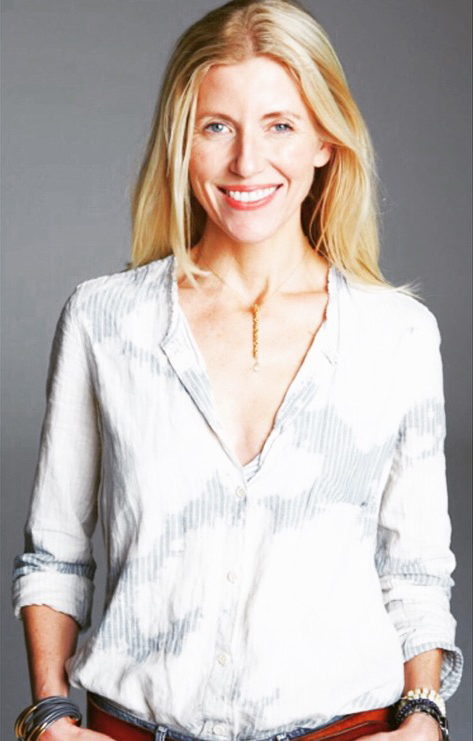
photo of Amy Swift Crosby

I’m a brand strategist and copy writer. I mostly work with partner agencies or directly with the leadership or founding team at a brand. My primary mission is to connect design and messaging solutions to business missions. I work with start-ups and Fortune 500 companies, across beauty, hospitality, wellness/fitness, CPG and retail. This blog reflects my personal writing and explores our humanity – often as it relates to work, space, time and language. You can review my portfolio here or connect with me here.

Photo - Andrew Stiles

The Brandsmiths Podcast


Brand Strategists Hilary Laffer and Amy Swift Crosby tackle business questions with candid, (mostly) serious and definitely unscripted workshopping sessions. Guests – from small business owners to CEOs, executive directors and founders – bring their head-scratchers, hunches and conundrums to Hilary, the owner of a boutique creative agency in Los Angeles, and Amy, a copy writer.

Search Posts


Latest Posts

  • The Last Time.
  • Barefoot.
  • Mileage.
  • Everything.
  • Eddy.


Copyright 2026 Amy Swift Crosby