• Home/Blog
  • Podcast
  • About
    • Contact
  • Portfolio
    • Advertising
    • Strategy
    • Taglines
    • Filmwork
  • Subscribe
  • search

Amy Swift Crosby

the story is in the telling

Format

August 2, 2016 · By Amy Swift Crosby

The other day a small business owner (a man), noted how much my blog seems to “feel his pain.” I liked the compliment but then had to ask — “do you think it’s too dark? Do I share too much about the struggle versus the joy?” We had a good conversation about how there are plenty of inspirational slogans and memes and hero-driven, blue-sky press profiles of successful entrepreneurs, to say nothing of the Facebook phenomenon of the-fabulous-life-you’re-not-living…but that too few people talk about the swamp, the hairy underbelly, of this entrepreneurial life.

I think I do talk about the challenge more than the pleasure because I’ve established a “space” where I unpack conventional wisdom. That is my format. You have one too — whether it’s in writing or in a product that solves problems or a regular event or even your social media feed. People have come to expect a certain contribution from you. Continuing to support and inform that “format” builds your voice in that space.

There are platforms where it’s always a mom championing the underdog, or a cook working without sugars, or an entrepreneur on the balcony of her five star hotel (showing you what success looks like…ahem.) The topics change, but the conversation should always share a common DNA.

If I wrote about yacht excursions and shopping trips to Paris, maybe you’d still read —but it would be for a different reason.  My format relies on asking questions, pushing back on accepted wisdom — and  — not always having answers.

Your format is your formula. What do you do / say / make / reflect — that no one else does in the same way? Figure it out. Then keep doing it.
Attachments.

July 26, 2016 · By Amy Swift Crosby

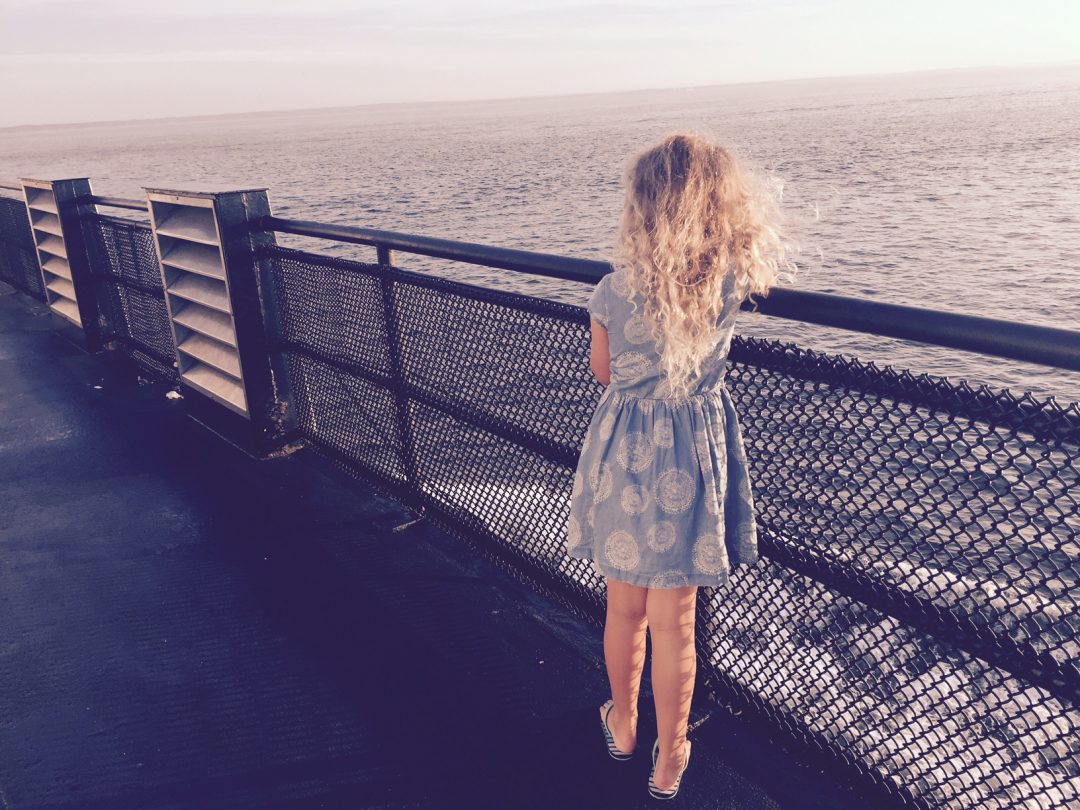
On the ship, but not behind the wheel.

When your hands are clenched around it.
When losing it feels like a heartbreak.
When what you have the power to do, and what will save it, aren’t the same.
When you’re so far out to sea, the land has disappeared.

It’s normal to be attached to outcomes. If we weren’t, good and great work (they’re different) couldn’t and wouldn’t materialize. But what happens when your attachments run so deep on a project, to a person, to an idea or to a business, that the path to getting there — even if you get there — is so circular and sideways moving — you start to question whether the prize is worth having? In other words, is what it takes to have it / do it / achieve it, worth the battle scars? It’s a personal question. Everyone’s ability to tolerate a process is different. You only know how thick your skin is, how deep your patience runs, how much fight is in there — by doing it.

Part of my job requires attachment. So does yours. Like you, I sink my teeth in. I care. A lot. I’m invested and serious about meeting the standard of excellence. But where I have a question is here: how do I remain attached and engaged enough to bring my best, continue to commit my energy and mindshare, my emotional real estate — when it might, or easily might not, steer the ship to new, more profitable territory?

For me, the results only feel good if the process was one of earnest commitment from everyone.

I don’t know how to answer my own question.
I do know I can’t function at less than 100%.

So now I have a new job: Figure out how to deliver best possible level of thinking, creativity, teamwork and communication, give people the best context and visibility from my vantage point, guide with an open palm, not a fist — and then release 90% of the attachment to what happens.

I’m so not there.
But I want to be.

Who gets your best you.

July 19, 2016 · By Amy Swift Crosby

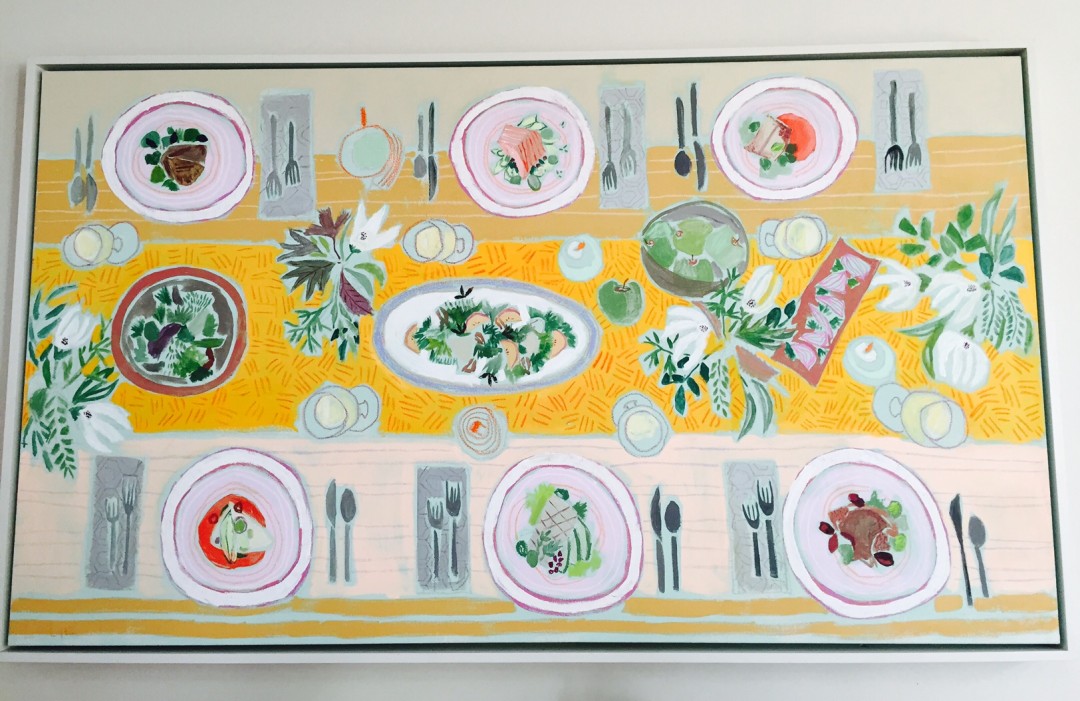
Courtesy @channelgreen

There’s a food pantry near me that serves hot meals to people who might not get one during the week. When I watch the director of the program run and operate the kitchen, the thing that strikes me most – beyond his calm, centered demeanor, truly stunning organizational skills, the ability to anticipate and solve every single challenge that arrises, kind but clear directives to everyone in the kitchen and dining room and pantry – is his highly specific instructions to volunteers about plating food. You’d think a hot meal of roasted chicken, macaroni and cheese and fresh spinach salad would be a gift in itself. Nope. Not enough. He wants to see the food plated with care and attention to what color borders what – to what’s hottest and ready to serve – to clean lines and generous portions. The Open Door is a step above a soup kitchen for sure, but still – often when people are on the margins – our standard quickly becomes “well, it’s better than nothing.” Not for Ken.

I was recently in Charleston, South Carolina where I watched a celebrated chef approve (or send back) every single dish that came out. Totally different demeanor (barking, swearing, sweating). Between wiping the sides of a bowl or correcting the crispiness of a pig ear, it had to be perfect. His name is on the door. His New York Times review is at stake. Every night. He cares because he has to hold up a brand for which even he works.

But really, there’s no difference in the results both of these men achieve (their approaches vary wildly!).  Each brings a pride, discipline and discernment to their work. One is famous –  the other an ordinary angel, mostly anonymous to the world at large. But they care. And their teams hover and dance around them with respect and appreciation. Those customers – whether eating off a white tablecloth or linoleum cafeteria table – get their everything.

Do some people / clients / friends / relationships get our best? While others settle for our good enough? When no one is watching, does it matter?

It does.

Divided.

July 12, 2016 · By Amy Swift Crosby

Image from dan_nbl24 of Instagram.

No matter how close or far you find yourself to events of the past days and months, if you aren’t grieving or enraged, you’re at least baffled by how we got here as a country. So many of us are consumed and distracted by our own challenges and burdens, and then reminded – of course – that a bigger crisis surrounds not only the United States but also the world. We are divided by race. By authority. By religion. By gender. Right now it’s easy to forget what unites us.

What can be done? I have the sensation of watching an accident with no power to stop it, call an ambulance, hold the hand of a victim. But we still have the power to make a positive impact.

We can avoid divisiveness over the daily, the trivial, the low hanging fruit of bad drivers or the mission to be right. We can stop being offended by whatever rubs us wrong.  We can be less demanding, more curious. Less finger pointing, more accountable. There’s no time or room for that now. These tedious conflicts are quickly becoming luxuries.

As small business owners, we can lead a small but powerful movement that chooses to assume the highest possible intention. We have to start somewhere, in small but meaningful decisions, that at the very least don’t add to the rising tension – and at the most – raise the collective consciousness of an important web of voices. Use your  power to lead, change and soothe. Not just publicly and professionally. But privately. Personally. Proactively.

Let’s do that. Starting right now. #yeswecan.

Performance.

July 5, 2016 · By Amy Swift Crosby

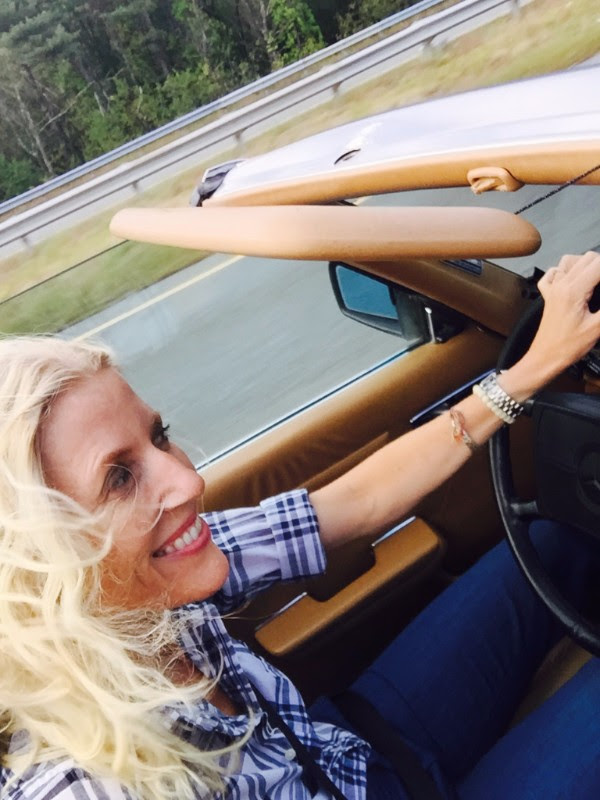
In my vintage Benz. The '80s got a few things right.

What happens when we can’t…do what we normally do? When our naturalness doesn’t come through? When we fall down? And maybe can’t quite get up?

First, humility. The reminder of your humanity descends like a drumbeat in your chest. Then, a short (or long) spiral of despair. Why this? Why now? Why in front of him / her / them? And finally – bargaining. The attempt to persuade yourself that you are not that, it is not you, and that output doesn’t necessarily make you any more or less than you were yesterday. This too shall pass, you say.

We try not to tie our performance to our value. But it’s hard not to.

There are two ways to see this:

You can decide that having the opportunity to experience the granularity of your emotions is a gift. A ride you willingly take. Because the rewards are self-knowledge, and sometimes a chance to see someone else’s generous reflection in reaction your own fumble, is deeply beautiful. It’s something you might not see in the throws of success.

The other way is to avoid biting the hook at all. That means the highs aren’t as high, nor are the lows that low – because you’re not on the ride. You’ve meditated / medicated / mediated your way to an unmovable center that feels, moves, risks – but never too much.

I vacillate on this. Better to pop the top off the convertible and feel the magic hours in their splendor? Knowing with the top down, you’ll be exposed to all the weather of every season? Or, better to get behind the wheel of a Volvo, smooth, steady, no jagged edges, and feel the sun through a small, unsatisfying sun roof.

Let’s go for the elements. You’ll get wet and cold sometimes, but there’s nothing like it when it works.

For the Originators

June 28, 2016 · By Amy Swift Crosby

This is copy I wrote for a rug company - but it seems more like a love letter. But guess what? No one wants to hear about rugs. They want to buy a feeling - a sensation - an idea. Good creative often comes from unexpected places.

When you’re the one in an organization or team or universe who generates the “first draft/concept/idea” for things, you’ll see yourself in this post right away. There can be a lot of pressure in this role – mostly because before there’s any “there” there, no one has anything to react to. But once you’ve put thought to paper / idea to prototype / color to design / post to publish / paint to canvas, people feel free to criticize, analyze, metabolize – suddenly there’s a conversation (that wasn’t happening before you started it.). I know I’ve sometimes felt resentment over this position – other times (most times, actually) I expect it and enjoy it. But someone has to start somewhere, and if that’s you, there’s a certain excitement / burden around it.

You may find yourself occasionally wondering if there’s anything left to say, to create, to make, to express. Looking at nothing before you make something can be intimidating as hell. As a professional writer, I’m usually the first one. The team often waits until I generate the strategy document, the concept, the copy, the tagline…and then base their work on some foundation using that work. Sometimes this feels fine – totally natural. Other times I’ve wondered…is there anything left in here?!?!? What can I say that hasn’t been said?

A few tips I try to give myself when I’m scraping bottom of the barrel:

Aim low. Land high. This is something Tim Ferris and others also use to get out of consternation and into production. A scientist at Stanford uses flossing teeth as the analogy. Want to floss more? Start with your front teeth only. Soon you’ll realize how lame this goal really is, and you’ll be a flosser in no time. When it comes to ideas and creative, just generate bottom of the barrel – knowingly – and let it iterate. Ferris talks about “two crappy pages a day” when writing a book. It’s good advice because by setting the bar low, you can’t help but do better. And then better. And soon really freaking good. But aiming for “opus” out of the gate is a set up to disappoint yourself.

Reach in. Not out. I think a lot of us imagine our creative ideas and energies live somewhere outside of us. This is a myth. Everything you’ve seen, read, experienced, cried about, laughed about, wow’ed about, been about – is in your ecosystem of ideas. Your source material is you – and everything you’re connected to in the current of collective thought and divine (if I might)… energy. Believe that it’s inside you, not outside you – and start there. There’s so much less mileage involved when you start with yourself instead of trying to go to the moon and back.

Great copy, great ideas, great products start as seeds from somewhere – where they end up is up to you. Your mind is a well of creativity that’s never really in danger of running dry. Your machine needs to rest to churn it out, but it’s not going anywhere. It’s one of the only assets that when spent, just keeps growing. To use it is to multiply it.

Newer Posts
Older Posts

Portfolio Categories

  • Advertising
  • Strategy
  • Taglines
  • Filmwork

Shortlist of Clients

  • Bulgari
  • B&H Photography
  • GUESS
  • PepsiCo
  • Proctor & Gamble
  • The Class by Taryn Toomey
  • Barre3
  • Mandarin Oriental
  • Sur LaTable

Big and small, start-ups and icons.

Subscribe

[insta-gallery id=”1″]

About Me

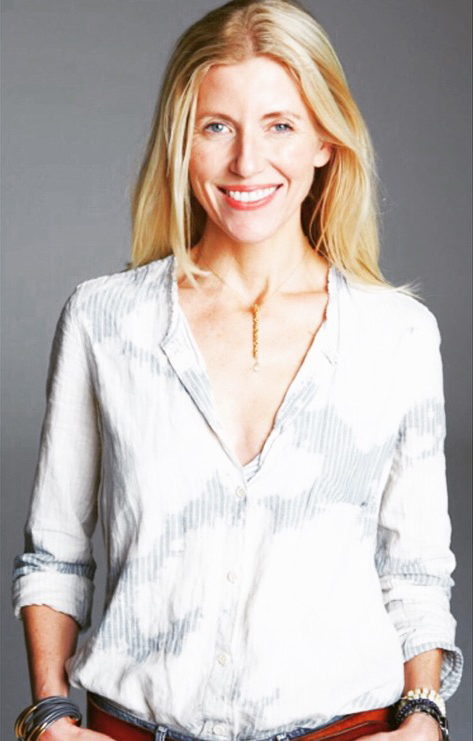
photo of Amy Swift Crosby

I’m a brand strategist and copy writer. I mostly work with partner agencies or directly with the leadership or founding team at a brand. My primary mission is to connect design and messaging solutions to business missions. I work with start-ups and Fortune 500 companies, across beauty, hospitality, wellness/fitness, CPG and retail. This blog reflects my personal writing and explores our humanity – often as it relates to work, space, time and language. You can review my portfolio here or connect with me here.

Photo - Andrew Stiles

The Brandsmiths Podcast


Brand Strategists Hilary Laffer and Amy Swift Crosby tackle business questions with candid, (mostly) serious and definitely unscripted workshopping sessions. Guests – from small business owners to CEOs, executive directors and founders – bring their head-scratchers, hunches and conundrums to Hilary, the owner of a boutique creative agency in Los Angeles, and Amy, a copy writer.

Search Posts


Latest Posts

  • The Last Time.
  • Barefoot.
  • Mileage.
  • Everything.
  • Eddy.


Copyright 2026 Amy Swift Crosby