• Home/Blog
  • Podcast
  • About
    • Contact
  • Portfolio
    • Advertising
    • Strategy
    • Taglines
    • Filmwork
  • Subscribe
  • search

Amy Swift Crosby

the story is in the telling

Big Brands

Colette.

July 18, 2017 · By Amy Swift Crosby

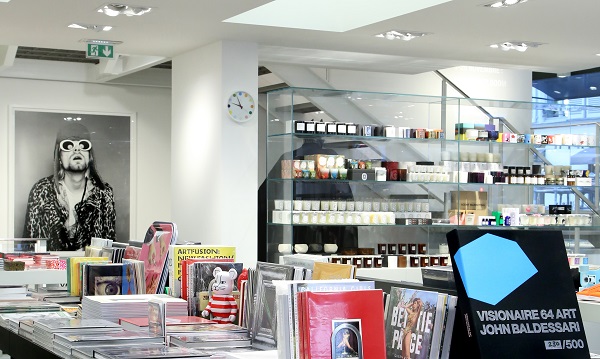
Courtesy, Colette.

Gallery/Bookstore/Runway/Water Bar. A key member of the Good Taste Committee retires.

Following a trip to Paris earlier this summer, I learned that one of my favorite reasons for going to this great city would be closing by year’s end. For as long as I can remember, the Parisian concept store Colette has been the retail embodiment of global style and experimental design — possibly even the birthplace of cool. On a busy corner on Rue St. Honore, this four-story retailer regularly unveiled provocative window designs, unexpected collaborations and undiscovered talent, attracting critical recognition and insider credibility. You could always count on Colette to deliver something surprisingly imaginative, original, and brave. If this store were a person, she would be as direct and disarming as she was enigmatic; a beautiful contradiction that always made sense.

It is hard to see a good thing come to an end, but my heart also breaks for what the closing of Colette might mean, in the broader sense.

Can the deeply original, but (intentionally) un- scalable, survive anymore?
Is the mass-market becoming the only sustainable market?
Do beloved spots like Louis Boston (Boston), Le Deux Gamin (New York City), Zenon (Eugene, Oregon), Dutton’s (Los Angeles) have finite life spans and is this what makes us fall in love with them?

Does the nature of true chemistry need to be fleeting…for us to embrace and appreciate it?

When a place, person or idea yields to whatever unknown market forces may be at work, I get a pang of existential angst. Why is it, with so many expendable options, that it is the rare and un-replicable that leave us?

Whether we know it or not, I think we crave these provocateurs, their discerning eyes, playful spirits and indelible points of view. We need these risk takers to continue to experiment, to connect dots between disciplines and industries the rest of us can’t even see. I know I look forward to seeing how design, art, commerce, pop culture, fashion, literature, music, and food cross-pollinate and amplify one another. Beyond the aesthetics, these visionaries make sense of things we didn’t know we were trying to solve. Their creativity opens doors and creates ripples, and ultimately raises the average.

I don’t actually think originality is getting diluted or disappearing, but do think that we, as consumers, may need to be bolder in recognizing and supporting these valuable outposts.

Thank you, Colette, for building an altar for our imaginations. Long live the many places, like you, around the world, who continue to take chances, and who unearth ideas that resonate, provoke and inspire us.

Let’s continue to celebrate you, with our attention and patronage, wherever we find you.
Big Life

Downsellers.

July 10, 2017 · By Amy Swift Crosby

Most of us fall into one of two camps: Upsellers or Downsellers.

Upsellers are always going to give you the bright side — the pitch on why you should do x, y, or z. They are perceived by many as positive.

Downsellers, on the other hand, are always going to offer up both the strengths and weaknesses of doing that same x, y, or z. They may or may not be invested in enrolling you in the experience. Still, they — or shall I say we – are often perceived as being critical.

Our “spiritually” over-saturated culture has done much to create an unwritten code of positivity. An allegiance to being “positive” throughout every interaction has become ubiquitous. Upsellers are rewarded for their limitless positivity, while Downsellers are thought to be “downers.”

Clearly, it triggers something in me because as a life long Downseller, I think it’s disingenuous to put a positive spin on experiences or products simply to avoid being thought of as “negative.“ When did critical thinking translate to bad mojo?  I see it less as a view on someone’s disposition and more a difference in filters.

But here’s the problem.

A Downseller can’t unsee what she sees (I’ve tried.) I can walk into a freshly cleaned kitchen and see tomato sauce on a floorboard before I acknowledge the sparkling counters. It also means I can open a design presentation or read a headline and identify why it doesn’t (yet) work. I don’t particularly like the burden of the ‘gift’ at times, but an engaged and critical mind serves me well at work and adds a lens to how I see the world that creates value for my clients.

The reason Downsellers make great consultants is that they have a very high “negativity bias,” which in simple terms means, they see what’s missing naturally and quickly. Whether creatively, operationally, or managerially, this ability acts like X-Ray vision, and is precisely what allows them to improve what others may think is finished – unearthing blind spots that can be game-changing for a business.

Downsellers may appear to see the glass half empty, but the reality is, we just see the glass for what it is; clean, dirty, soap spots, lipstick rims. The thoughts presented by a Downseller may be harder to swallow, but in certain circumstances, could prove to be more potent.

But if I’m being really honest, we sometimes come off as continuously unsatisfied, with standards that can’t be met. And that’s not really useful, for any reason.

So…

A challenge to Downsellers: We need to use our powers for good, and position whatever feedback we have with a solution in mind. We can present our ‘truth’ with enthusiasm, support and genuine intention. And there is no harm in turning off the filter when it no longer serves the mission.

And to Upsellers: Please know that we do what we do because we care. We may have an opinion about everything, which admittedly gets tiring, but know that because of us, there is probably less mediocrity in the world. #yourewelcome

Big Life

Hood Ornaments.

July 3, 2017 · By Amy Swift Crosby

Warhol called it.

For those of you who feel ambivalent about placing yourselves at the center of your brand’s marketing efforts, this commentary is for you.

Years ago, as the creator of monthly SMARTY events, I was moderating panels of extraordinary women helming press-worthy businesses. This visibility placed me on the receiving end of some considerable attention and unexpected brand opportunities. While it was all very positive, it forced me to think carefully about how to respond to it-and how to leverage it. You’ve probably had to consider similar choices.

The prevailing advice I heard at that time was to “Make it about me.” Smart, well-meaning people tried to convince me to lead by example, which would have required me to build a digital platform and take pictures of myself on vacation or enjoying the fruits of my labor, all while espousing tips on “how you, too, can become…bigger/better/richer.” Or basically, more like me.

Although this approach may be profitable, at the time, it gave me the moral stomach flu.

It makes me question where we want to live when it comes to self-promotion — and where do we start to get a little nauseated by it? Is there anything wrong with sharing talents, achievements and deluxe vistas as a brand strategy? Not inherently. After all, this is at the heart of social media.

Yet, as the chief promotional officers of our own brands, many of us feel simultaneously that we are the best hood ornament for what we sell while being keenly aware of the tension it produces.

One script does not fit all — and I think everyone has to answer this for herself. I moved 3,000 miles away from me-as-a-brand-opportunity due, in part, to ambition fatigue. Not because I was exhausting myself with my own, but because being around so much ambition, and the resulting self-promotion, was exhausting me. That’s my own tolerance showing, not a judgment against what anyone else’s may be.

But….in a world where professional narcissism is at an all time high, there should be some self-imposed guardrails. My own requirement is that I not embarrass myself (to myself). That, I cannot live with, no matter the applause that may be generated “out there.”

Here’s a thought that may be relevant for anyone — whether flexing abs in a bikini or doling out champagne dreams from Rome: Even if you are your own brand, and you are the thing you’re selling-whether it be expertise, wisdom or flip flops-consider that there’s a lot more longevity in standing for something bigger than yourself.

The spotlight may be required to stay on you, for whatever reason, but my advice (did I just contradict myself?) is to make yourself a representative of the mission. Not the mission itself.

Small Business

Singular.

June 26, 2017 · By Amy Swift Crosby

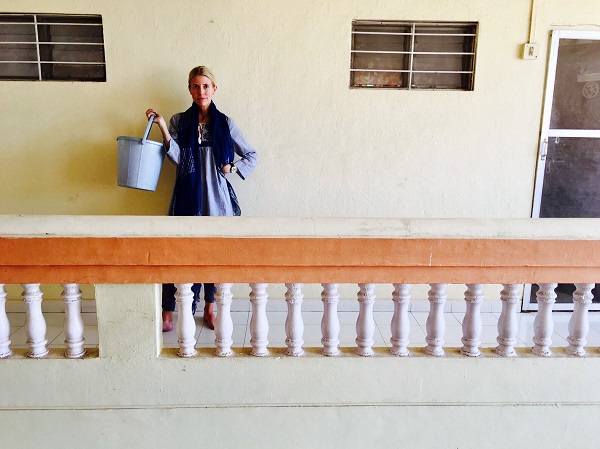
Trymbakeshwar, India

The bucket shower = a product worth iteration.

I recently read about new bar concept in Los Angeles. To be more specific, the concept was “a bar within a bar” – surely a watering hole for the coolest of the cool. This is an idea curated for those among us who can no longer be bothered with a cool standalone bar, cool hotel lobby bar or even a cool restaurant bar. This bar (within an existing bar) has no visible sign (of course), and earnestly offers only six drinks – all of which, upon reviewing the menu-  you could get at an airport. It would be one thing if they were importing Turkish cherries or growing their own sage. But their big idea was to merely tuck a tinier, more exclusive bar, behind a bigger more public one — and take that to market. Hmmm.

Private clubs, password protected back rooms and speakeasy ‘underground’ concepts aren’t new, but I have to laugh at these new attempts at manufactured secrecy/hip factor. They can only find an audience when good has gotten so good, that it’s not good enough.

We see this in a lot of categories.

Should Audi be featuring terroir-sourced tea as part of their new perks program?
Do men need a 3-step facial hair regimen: beard oil, beard balm, and beard wash?
Do our water bottles need charged gemstones… to be truly hydrating?
Does a Snickers bar really need to be fried? (Okay, sometimes.)
Does a VIP room…need a VIP room?

I don’t begrudge anyone’s creativity nor would I want to dampen any entrepreneurial spirits — ever. But…I am going to laugh, in a loving way, at the machine responsible for it.

When we take ideas that work, but then feel compelled to make them more mysterious, exciting or “authentic,” are they potentially having the opposite effect? At what point do we gild the lily? When does a product or service go from inventive…to contrived? When is enough, enough, or too much…too much?

Iteration is a buzzword, and many feel pressure to make it the status quo. But lately, I lean toward forgoing novel and newsworthy in favor of effective and singular. Maybe we just need permission to get better at the (one) thing we do best.

Quite often, that is original enough.

Big Life

Half Me.

June 20, 2017 · By Amy Swift Crosby

@lshawbardsley

Gray areas are familiar territory, but not when it comes to letting people down.

To accept or decline.
To engage or pass.

It’s hard to predict when saying “yes” to something has the unintended consequence of disappointing people who hold you in high esteem. A recent situation had me questioning whether showing up at half-strength… was worse than canceling all together.

Like many of us, I’ve lived in different cities for meaningful periods of time. So when I find myself in my former stomping grounds, I often suffer from “never enough time to…” There’s rarely time to see everyone I want to see, do everything I want to do or be everywhere I want to be — because I’m there for work — which is the priority.

Recently, while on one such over-scheduled trip, I accepted an invitation to attend an intimate gathering organized by a friend; someone who, in kind, supports professional events/gatherings that I sponsor. But when the time came, my eyes were glazed over with fatigue, my voice was raw from talking all day, my brain was drained from problem-solving since 6am (to accommodate east coast time)…and all I wanted to do was turn off my phone and decompress. At the same time, I have always had an almost visceral reaction to flakiness, to a broken word — to disappointing anyone. I didn’t feel I could cancel, especially when I knew my presence was important to my friend.

In the end, I’m not sure that attending was the right decision because the version of me who did show up — kind of sucked. It was a “half me” — with energy more like a wilted flower than an additive contributor.

You have to wonder — who wins in that scenario? I kept a promise — but showed up on fumes. For those of you with an amazing game-face — you can pull this off far better than I can…. as I tend to wear my feelings, for better or worse, right on my face. At a big event, I can get away with it – but among just a few people — it doesn’t go unnoticed. Clearly (I mean I’m writing this, right?) it’s still pulling on my conscience in some way.

I find myself torn between wanting to apologize for lackluster presence — and – wanting a pat on the back for showing up at all.

Is the only option to prequalify a RSVP with, “Maybe, but I’ll be coming off a long day”?

This, and others like it, sound so (very) lame to me, as I judge them all as a half-yes — in other words — an insurance policy on a future copout.

But I can’t think of a better way to demonstrate support and make room for the possibility of yes, but insulate myself from the chagrin of canceling at the last hour and becoming one of “those” people.

This post requires suggestions.

What is your strategy for conundrums like these? Weigh in here. Inquiring minds need your wisdom.

Big Life

Metaphor.

June 12, 2017 · By Amy Swift Crosby

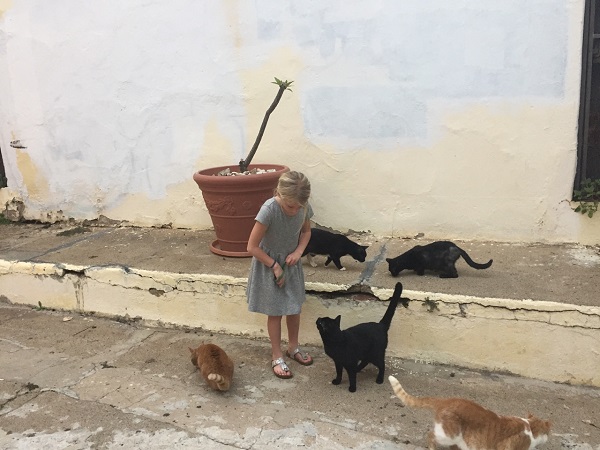
Unknowing what we know is a lot like herding cats.

You really remind me of…
This project is a lot like…
That situation is very similar to…

Metaphors help us make sense of things. When we compare ‘this’ to ‘that’ it gives us the ability to experience something new, as familiar. But the moment we look for sameness, might also be the moment we lose our ability to experience something new in its purest expression. It seems like the act of searching for relatedness — in a relationship, project or circumstance – might unknowingly steal its potential. As a person conditioned to finding a pattern and connecting dots, there may be real value in doing the opposite. Could a tabula rasa state-of-being be more conducive to creativity, growth or depth? Is that even possible?

When I traveled to India earlier this year, our teacher asked us to resist making comparisons when tasting a new food or making cultural observations. This doesn’t seem revolutionary, but it takes conscientious restraint. When goats meandered through a chaotic urban thoroughfare, we made an effort to see that juxtaposition through new eyes, rather than revisit past trips and locales in our minds. We resisted the urge to compare monastic Ashrams in India to their cushy American counterparts, even though instant comparisons would have been easy to draw. It would also be natural to compare daily staples like chapatti, chai or Kanda Poha to other cultures’ quotidian equivalents. It takes discipline not to do this, surprisingly, especially in every day (non-exotic) settings.

I brought home an important lesson in this teaching.

Our instinct is to make meaning when faced with something new or foreign — to tie it to something we do know and understand. In fact running a successful business depends on it and signals our level of experience. Practically speaking, it creates efficiencies for others who need to understand our vision more immediately — and there’s obviously a place for this.

But maybe there’s also room to abstain from it, too. Assigning something we know, to something we don’t yet know, may have the unintended effect of removing whatever may be idiosyncratic or defining or purest about the new experience. Knee-jerk ‘labeling’ may actually limit our potential to see/grow or feel something more fully for what it really is.

Lately, I’m trying to clear this particular cache, if you will.
When a circumstance arises that makes me uncomfortable, or that I don’t immediately understand, I’m resisting the urge to narrate it — to put the expected punctuation around it as a salve to comfort or soothe what unsettles me about it.

Sometimes our own certainty is the very barrier we need to break through. Expansion – or a different kind of knowledge – could be waiting on the other side.

Newer Posts
Older Posts

[insta-gallery id=”1″]

About Me

photo of Amy Swift Crosby

I’m a brand strategist and copy writer. I mostly work with partner agencies or directly with the leadership or founding team at a brand. My primary mission is to connect design and messaging solutions to business missions. I work with start-ups and Fortune 500 companies, across beauty, hospitality, wellness/fitness, CPG and retail. This blog reflects my personal writing and explores our humanity – often as it relates to work, space, time and language. You can review my portfolio here or connect with me here.

Photo - Andrew Stiles

The Brandsmiths Podcast


Brand Strategists Hilary Laffer and Amy Swift Crosby tackle business questions with candid, (mostly) serious and definitely unscripted workshopping sessions. Guests – from small business owners to CEOs, executive directors and founders – bring their head-scratchers, hunches and conundrums to Hilary, the owner of a boutique creative agency in Los Angeles, and Amy, a copy writer.

Search Posts


Latest Posts

  • The Last Time.
  • Barefoot.
  • Mileage.
  • Everything.
  • Eddy.


Copyright 2025 Amy Swift Crosby