• Home/Blog
  • Podcast
  • About
    • Contact
  • Portfolio
    • Advertising
    • Strategy
    • Taglines
    • Filmwork
  • Subscribe
  • search

Amy Swift Crosby

the story is in the telling

Tinkering.

March 15, 2016 · By Amy Swift Crosby

Here's to "productive", or "non-productive" putzing. Because it's all productive.

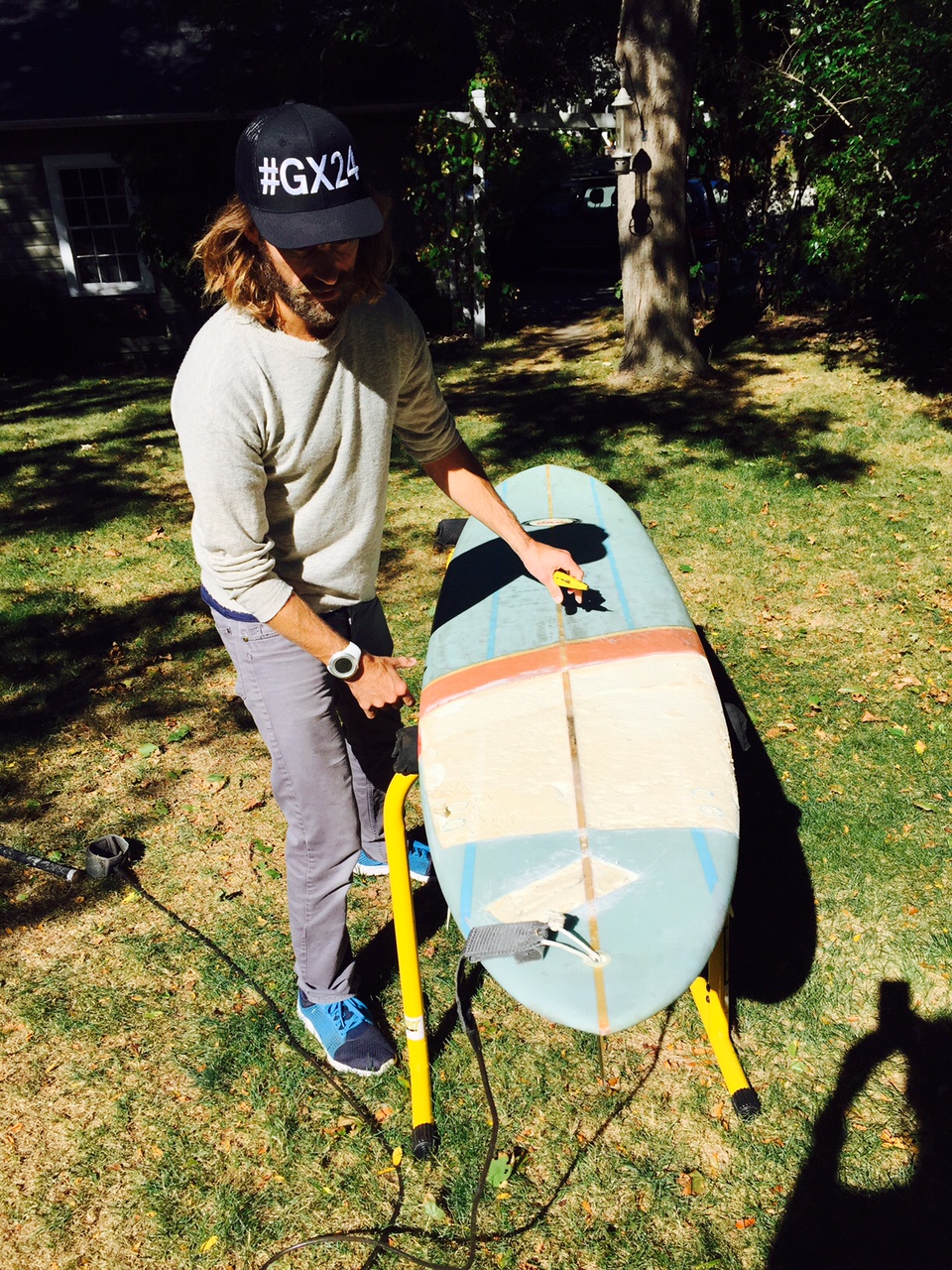
“I’ll be out in the garage” is a phrase often uttered by my husband on weekends. What exactly happens “in the garage”? Some days he’ll emerge having reorganized all of his bikes, surfboards, SUPS, kayaks, skateboards (shall I go on?), and other days I can’t tell if anything really happened. But I think that’s the point. It doesn’t have to.

And it’s why I believe in tinkering.

The guy gets to be alone, without an agenda, without the kids asking to play monster, or me asking about the status of the (insert chronic historical house problem here.) He gets to do no-thing, while doing some-thing, and think. But he gets to think without being charged with thinking. And he gets to use his hands and figure stuff out – work stuff out – build stuff out – without much attachment to an outcome or life-changing expectations. When else in your life do you tinker – with no strings attached? This is how problems are solved, ideas born. Garages are ideal, but there are other options, too.

I’ve solved client issues while building magazine collages with my girls. I’ve thought of short stories while washing dishes or cleaning out the spice drawer. I’ve dreamed up solutions to friends’ conundrums – personally, in business, in life – while weeding my vegetable garden. 

My grandfather used to spend hours “down at the boat.” I’d see my grandmother roll her eyes at this, as we all knew the boat hadn’t actually worked in decades. But now I get it. And respect it.

Should we consider Intentional Tinkering? Conscious tinkering? LeanInTinkering? Tinkering Forward?

Someone stop me.
Badassery.

March 1, 2016 · By Amy Swift Crosby

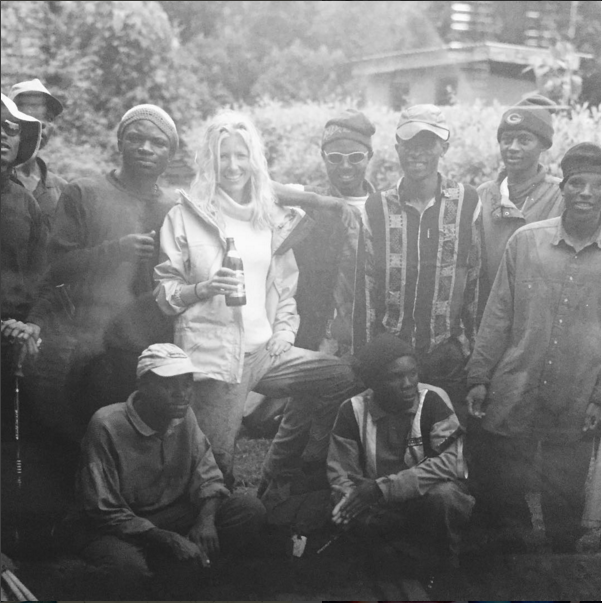
Climbing Kilimanjaro (the hard route!)? Badass. Too bad I can't post my natural childbirth pictures #thebestkindofbadass. Photo credit Kurt Marcus.

When you feel like a badass, life is good. Typically you’ve nailed a project, done something heroic, completed a marathon, landed a gig – whatever. You know it when you feel it. But what if we could badassify our lives a little more? Here’s my rationale: the more you feel like the best version of yourself you can be, the more you exceed your own expectations, and the more you choose yourself when the world would have you another way. When you choose yourself, a positive domino effect ensues. In short, more good sh$t happens.

Here is what helps me channel that feeling on a day to day basis – whether I’ve done anything memorable, exceptional or newsworthy, or not:

1. Surround yourself with teams and people who make you feel like you’ve achieved something – just by being in their company. They don’t have to blow smoke up your….skirt…or do anything other than share air and space and even better, a shared passion or project with you. Just being with people you respect and admire – like a lot – brings out the badass in us.

2. Revisit moments from your life that made you feel limitless and amazing. You can see a couple of mine referenced in the photo. So many of us forget that we’ve blown our own minds!!! It’s worth a trip down memory lane to remember.

3. Disrupt your day to day conversation with people by telling them the good things you see in them. You can start off with, “You know what’s incredible about you?” and then SEE them in the way that only you see them, and tell them about it. “You give the clearest, most actionable feedback anyone could ever hope to get,” or, “You can take the most awkward moment and make it hilarious,” or, “you have the body of Jessica Alba, the intellect of Madeline Albright, the presence of Michelle Obama and the wit of Chelsea Handler.” (If you know anyone like that please introduce us.)

Here’s to being a badass, and not waiting for moments in the sun to feel it. #everydaybadass.
PS. Props to my old friend Jen Sincero who wrote a book on this subject titled, “You are a Badass.” Perhaps you’ve seen it at the airport as it is nowhewwwwge (another Jen-ism.)

Adaptation.

February 23, 2016 · By Amy Swift Crosby

Playboy, in an effort to reinvent, has made the decision to discontinue images of naked women. They’re just too easy to find everywhere else. Movie theaters are struggling because most of us would rather skip the crowds and watch things on demand at home. Instagram has made having a point of view as hassle free as it gets – no need to start a blog – just create an account and press play.

We are living in a time where it’s easy to blame digital for the elimination of entire categories. People blame a sharing economy – Air BnB and Uber – for putting their competitors out of business, or at least at a disadvantage. But digital is just the medium. What it’s done is teach us to think and interact with our worlds in a totally different way – and it’s been a bit like boiling a frog (sorry)…so gradual we aren’t even aware of how much we want short cuts, efficiencies, ease in our consumption.

Port this behavior over into your own business now. See if you’ve adapted to the very things that make you happy or bring you down about the experiences in your consumer world. Is your website responsive? Are you using tactics from five years ago to build your list, convert customers or drive new business?

All you have to do when it comes to relevance is look around. As brands reinvent, go out of business and new miracle utilities are born, the messages are as good as on the wall. Just look at the battle between the WSJ and NYT. As one pulls ahead, the other retools (and catches up) because they both know that a paper in the hand is worth a lot less than a subscriber online these days. You don’t have to invent an app that aggregates fitness sign ups or makes getting a blow out easier (as they already exist), but you do have to continually think of shortcuts on behalf of your customer.

Watch. Listen. Learn. Adapt.

We Hate It When Our Friends become Successful.

February 16, 2016 · By Amy Swift Crosby

Well, no we don’t really, but we kinda do.

Here’s the theory on this: we don’t question ourselves when we see Beyonce with her mogul husband and adorable baby on a yacht in Turkey …because she’s too far from our stratosphere to make comparisons. What irks us most – what makes us privately question, berate and condemn ourselves – is the success of those around us, people who are most like us, and near our socioeconomic status – aka – our friends. Why? Because given the same resources and opportunities, she succeeded…and I didn’t.

“You’re wrong,” you’re saying right now, “I’m always happy for my friends!” Yes of course you are…but it’s a trigger, too. The science behind this makes perfect sense. It’s — proximity — more than anything else — that creates the “compare and despair” mentality. The truth is that as our friends become more successful and famous, they typically open doors for us as well – either financially, spiritually or literally. We like that. But let’s be real – it still stings a little to know that you’re the same age-ish, same education, same small town, same training, same opportunity…and not same popular / tax bracket / fame quotient.

Here’s a quickie to get you out of that jam should you find yourself blinded by the glare of unwanted jealousy / resentment / yearning / self-loathing:

When we long for things / status / success we don’t have, we grow poorer, no matter our resources. Every time we feel satisfied with what we have and where we are, we grow richer, however little we may actually have at the time.

I didn’t make that up. It’s from the philosopher Rousseau. No one’s saying don’t be ambitious or strive for more, but agree that what you have is what you wanted. And go from there. And console yourself that at least you and Bey weren’t besties since pre-K.

Alone in the Field.

February 9, 2016 · By Amy Swift Crosby

We all find ourselves alone in a battle once in a while. Whether you’re on a team as part of a project, as the owner of the business trying to get something right with a vendor, a sales person, a retailer, a manufacturer, a partner – it’s not that fun, but not that uncommon, to find yourself alone at the table trying to persuade, convince, edit, modify, evolve or otherwise impact something that needs attention.

There are ways to do this that feel like a bulldozer. And ways to do this that feel like a gazelle. I aim for the latter, even though my emotions can feel like the former. Here’s how I try to approach a difference of vision when I feel alone in my convictions:

1. Take as much responsibility as possible for why things are the way they are. It may not feel natural, and it may not feel totally true deep down, but honestly look at how you got here. Usually there was a lapse in clear communication along the way. Condescension and “it’s me, not you” won’t work. You have to make this assessment genuinely. Others will sense it if not (and then, game-over.)

2. Don’t make anyone wrong for what they’ve done or haven’t done (unless you’re managing an employee, which is a different dynamic.) No one likes to feel wrong – not a friend, not a husband, not a partner, not a service provider – not one person ever in history. I’m hugely imperfect at this – but I try to see the rightness in what HAS happened, and take that tone to change what’s not working.

3. Most of us have a colleague or companion of sorts we can confide in. But here’s the key – try not to be temperamental, defensive or even bitchy in your complaining about the problem. The tone you take in unpacking and bemoaning and explaining it to your confidante will inform how you think about fixing it. Talk about it with the level of maturity you hope to use in solving it.

It takes a lot to fight battles among people who you like and respect. I don’t like to call it fighting really, but it’s defending or promoting an aspect that isn’t getting the attention it needs. But to be an effective champion for any change, you have to start with how YOU got the train to the station. And it can’t be a strategy – you have to see your part, and mean it when you say it. These ideas come from the head, but have to be led with the heart.

Here’s to being alone. It will happen. But if you’re lucky, you’ll have a quiet (but loyal) companion to help you through.

Portraits.

February 3, 2016 · By Amy Swift Crosby

Jen blurry (art). Jen clear (commerce).

If we took as many selfies of our businesses as we did of our faces, we might make more honest assessments of what needs to change. But we fear feedback – giving it, receiving it.  We’re sometimes even scared of the people who work for us, but don’t want to admit it. We shudder at the thought of auditing people and processes because that means disruption, potentially being wrong, hurting feelings, being criticized. Our small companies often function on rocket fuel – adrenalin from an exciting client, a pitch, an opportunity, the “what-if’s” that make every day as a creative or entrepreneur or talent so fun and full of hope. 

Pausing is hard. Forward motion is easier. But have you ever just stood and looked yourself in the eye – for an uncomfortable amount of time? Looking into your own eyes, you see things. Personal things. Memories. Curiosities. Tendencies. Truths. When I created SMARTY in 2008, I was running on the adrenalin of leaving another women’s network as the editor in chief, wild-eyed and sleep deprived from the rigors of childbirth and breastfeeding, and the excitement of corralling a small team of people who could help me launch a different kind of business network for women. But we moved with such speed (ahem, seat-of-our-pants-ness) that I rarely took the time to assess our state of the union. Looking at P&L’s is one part of a businesses story – but really the overall picture was hard to capture. I wanted to look smarty in the eye and ponder it – but that would take too long and I was fielding too many potential land mines that I just Kept. It. Moving. I didn’t take selfies when I should have (which is why the model is now changing!).
If we can effectively turn the camera on our businesses – we could get past the discomfort of the long gaze and transcend beyond survival into relevance.

Here’s to more starring at ourselves in the mirror (no filter). The entrepreneurial selfie requires a deeper look. And one that takes feedback.

Newer Posts
Older Posts

Portfolio Categories

  • Advertising
  • Strategy
  • Taglines
  • Filmwork

Shortlist of Clients

  • Bulgari
  • B&H Photography
  • GUESS
  • PepsiCo
  • Proctor & Gamble
  • The Class by Taryn Toomey
  • Barre3
  • Mandarin Oriental
  • Sur LaTable

Big and small, start-ups and icons.

Subscribe

[insta-gallery id=”1″]

About Me

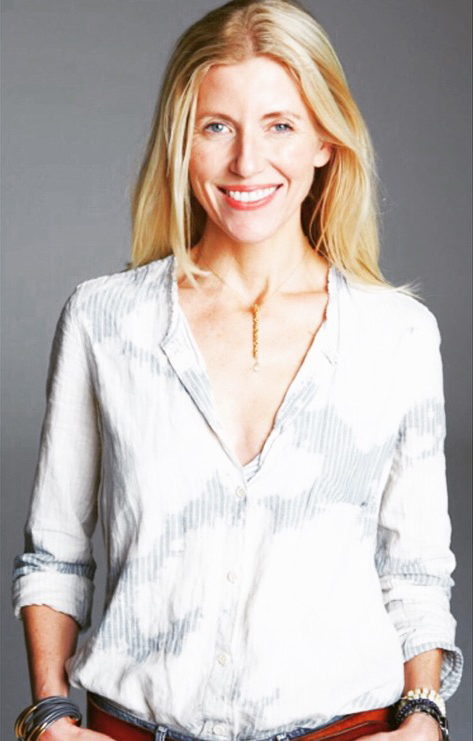
photo of Amy Swift Crosby

I’m a brand strategist and copy writer. I mostly work with partner agencies or directly with the leadership or founding team at a brand. My primary mission is to connect design and messaging solutions to business missions. I work with start-ups and Fortune 500 companies, across beauty, hospitality, wellness/fitness, CPG and retail. This blog reflects my personal writing and explores our humanity – often as it relates to work, space, time and language. You can review my portfolio here or connect with me here.

Photo - Andrew Stiles

The Brandsmiths Podcast


Brand Strategists Hilary Laffer and Amy Swift Crosby tackle business questions with candid, (mostly) serious and definitely unscripted workshopping sessions. Guests – from small business owners to CEOs, executive directors and founders – bring their head-scratchers, hunches and conundrums to Hilary, the owner of a boutique creative agency in Los Angeles, and Amy, a copy writer.

Search Posts


Latest Posts

  • The Last Time.
  • Barefoot.
  • Mileage.
  • Everything.
  • Eddy.


Copyright 2025 Amy Swift Crosby