• Home/Blog
  • Podcast
  • About
    • Contact
  • Portfolio
    • Advertising
    • Strategy
    • Taglines
    • Filmwork
  • Subscribe
  • search

Amy Swift Crosby

the story is in the telling

Small Business

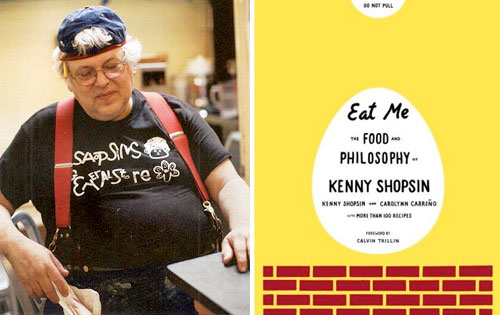
Kenny.

May 24, 2016 · By Amy Swift Crosby

Unlikely gurus: Kenny Shopsin

I used to go to Kenny’s restaurant when I lived in New York City. One reason I loved it, besides the six pages of comfort food offered on the menu, was that it had a lot of idiosyncratic rules; I saw real estate brokers get kicked out for talking on cell phones and bankers get asked to leave for thinking they could sit more than four in a group. I saw uptown ladies get schooled by Eve, the co-owner and waitress, about the uselessness of “dressing on the side,” and celebrities enjoy long lunches – undisturbed – because inside Shopsins, they felt safe. The main rule was Don’t Be An Asshole. That’s a heck of a mission statement.

I love how clear and unapologetic Kenny and Eve were about who could pay them, and who could F%ck off. I use that language because that’s how they talk – whether you’re a New York Times food critic or a condo broker. Being a customer was something you earned, not something you became by using a GroupOn. Here are a few gems from Kenny:

1. The most profitable item on the menu, out of hundreds (not a minimalist, but still an essentialist) is iced tea. And what is iced tea  but basically …water. The margins on an item that almost everyone orders are enormous. He knows it and gives free refills. And still makes money on it. (Where are your easiest, biggest margins?)

2. A milkshake, once perfectly thick, will never become thicker. It just can’t get better than it is, it only goes downhill if you try. So don’t. (This is a don’t guild the lilly kind of thing. You don’t have to make something good even better. With so much pressure to evolve and recreate and entertain our audiences, sometimes a good thing can stay exactly, precisely the way it is.)

3. Running a restaurant (for him) is about running a restaurant. It is not a means to get somewhere else, like so many endeavors. (OH. THANK. YOU. Why must evvvvvverything be a means to a show or a book or… a whatever?) I’ve always had ambition fatigue. He’s refreshing.

In a time where “customer acquisition strategy” is part of our everyday small business vocabulary, Kenny, for me, is a beacon of hope. Make good food. Keep your good customers close, and let the others find somewhere else to eat. And… don’t mistake fancy for elevated. Shopsins is a 5-star establishment in my mind. You don’t need a white tablecloth to be extraordinary.

Enjoy…xo
Big Life

Over Everything.

May 17, 2016 · By Amy Swift Crosby

Over committed.
Over extended.
Over burdened.
Over invested.
Over stretched.
Over achieving.
Over done.
Over wrought.
Over selling.
Over reacting.
Over board.

These cycles can happen to the best of us. We get onto a freeway going the speed limit, and within weeks or months find ourselves on the Autobahn. 60MPH becomes 90MPH. Soon there’s no off ramp, because you’re so embedded in what you think you “have” to do, you forget where you’re even going. Soon, the hobbies and extras disappear from life – an hour of email on a Sunday turns into six. Work feels like it’s got you on a leash – you can bark or you can get pulled – but unhooking never crosses your mind. Whether we get addicted to feeling needed and necessary, or find ourselves drowned in “passion” projects that steel precious life real estate, or engage with clients who need more than they can pay for, there’s no good reason to feel busted at the seams. Correction – there is a good reason – and that reason is to see the ultimate failure in it, and to get your life back. It’s what Essentialist author Greg McKeown calls “protecting the asset.” That asset is you.

Yes, there’s so much to do.
Yes, you have so much potential!
Yes, they need you and want you and are likely better for having you.
But without you, there’s no to-do, potential, client, product, message…

This book came at the right time for me. If you find yourself over delivering, over and over, and sitting at your desk at some point feeling over it, it’s time to read this big little life saver.

I know, #Overkill. But truth.

Big Life

See Me

May 11, 2016 · By Amy Swift Crosby

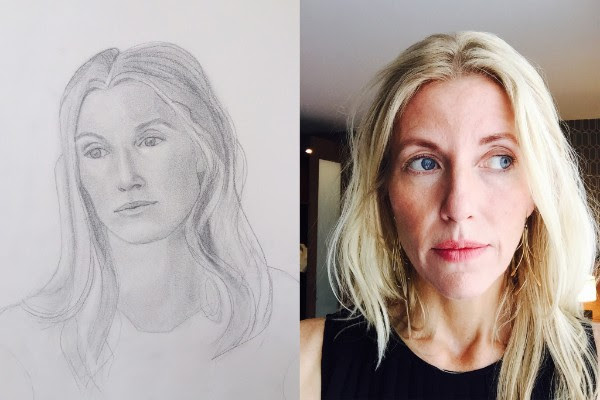
Some may see you in hand drawn black and white. Others in color photography. It's hard to control other people's mediums - which is why your own lens becomes very important.

When we feel invisible, in our work contributions, in our personal relationships, in our families, in our communities, as women, as mothers, as partners, as friends – it sucks (just to be really eloquent). There’s a rage, and then sadness, that comes from habitual invisibleness or insignificantness. Any time we don’t feel valued for what we bring, that yucky feeling translates across many platforms and manifests in funky ways. It might be a general cloud of negativity that dampens your magic. It could be overreacting to one thing when you’re really upset about another. It could be a vague malaise or fatigue or depression.  It can also look like constant complaints – suddenly, no one can make you happy because you’re unpleasable. The one thing you need fulfilled isn’t getting the light of day.

There’s frustration (and even indignation, or humiliation) when you give and give, and you give your BEST, and the people around you treat it like another Tuesday.

“We couldn’t do this without you.”
“Your work makes our work so much better.”
“You add so much to this team.”
“How do you do it?!?”
“Yes I’ll drop everything and come help you – that’s how much you mean to me.”

That’s what most of us simply need to hear. The overwhelming majority of us don’t need parades in our honor or cakes to celebrate how smart or brave or nifty we are. We just want the people we respect and love most to do one thing– see our worth, understand our circumstances, and act like it.

But you can’t make anyone do any of that. When it happens, it’s amazing, but in the meantime, try to take the time to count the ways that you impressed your own bad self. Stop relying on the world, a boss, a partner, a colleague –  to tell you. And take it ALL IN when someone you respect, notices. It’s not a cynical view, but when you stop looking for it, and start getting high on your own supply (if you will), it usually finds you.

#intrinsicrewards.


Big Life

Conditions

May 3, 2016 · By Amy Swift Crosby

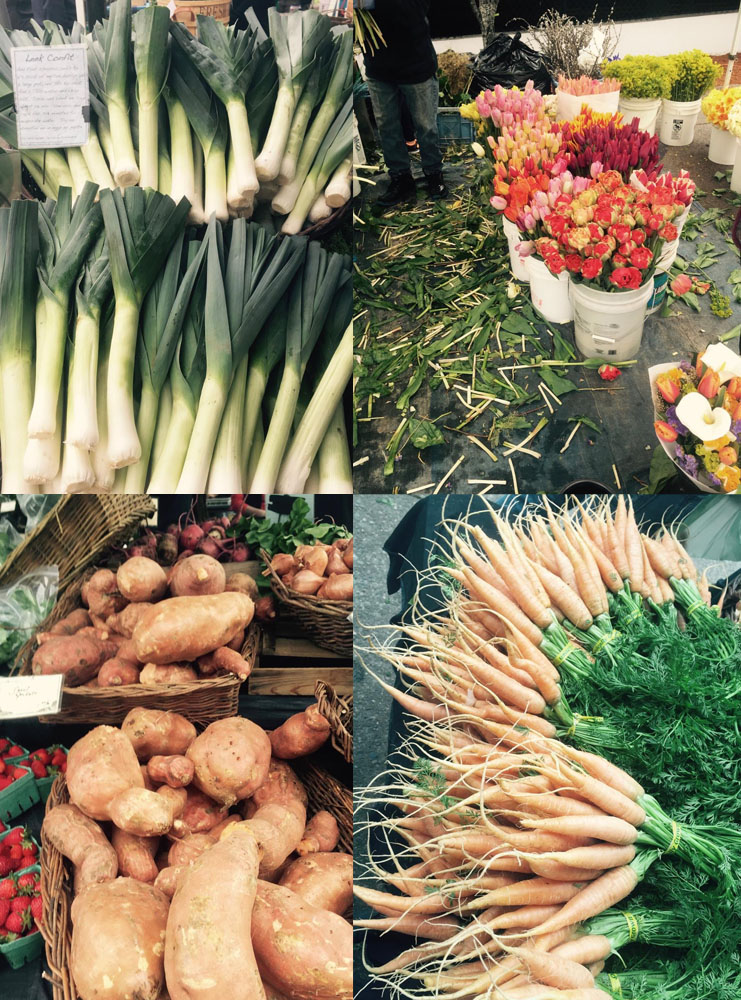
At the farmers market in my hometown, Eugene, Oregon a few weeks ago. Good soil. Wet weather. Love. You can see what good conditions produce!

One fantastic thing about aging – or really just the passage of time and the experience that comes with it – is how much we clearly see the conditions that support our success. You start to deeply commit to what it takes to be not just happy or successful – but actually effective.

This idea is easy to overlook. Conditions create the environments where you thrive, but can be easily ignored because they aren’t the “thing” themselves. They’re the supporting pillars for the “thing.”

Some examples here that are particular to me – and I’m sure an athlete, actor or CEO would have their own (very different) list.

Writing. I am on so many calls all week – which is part of my work – so I don’t nearly have the time to write that I used to. That means I have to create it – schedule days with no calls, no meetings. I protect these fiercely because if I don’t, I’m not as focused and good as I need to be. Saying no… in order to get to something right and good and persuasive – takes space.

Meetings. I almost always insist on an agenda (if I don’t see one in place.) An agenda-free meeting is one without the needed constraints to keep everyone focused and making decisions. Creating it or asking for it is an extra step that takes time. But without it…you have rabbit holes.

Media. I love reading, listening to podcasts, discovering new music, streaming TedTalks…all if it feels like fertilizing a garden of understanding the world, people, ideas. But not all of it. If I find myself deep into something silly – celeb gossip, Facebook, someone’s headlining misfortune – I try to move on. Not useful. Creates cobwebs. Dark thoughts.

Texts/Emails/Social: I don’t read email first thing in the morning, or during dinner with family, and I am completely out of the loop on viral jokes, and all the “things” that populate the internet for wow factor. This is because I guard my attention. I see how my device hijacks me. I feel this tension – and resist it as much as possible. It’s enough as it is!

Socializing: Once I learned that I’m actually an introvert (misidentified as an extrovert), I immediately understood why I regularly practice the Irish Goodbye at parties, and often leave an hour or two earlier than my husband. I have a certain social / party chatter tolerance – shorter than most, perhaps – which used to feel like a lack of endurance. But now I see that it’s my natural protection mechanisms kicking in – preserving physical and mentall space for my benefit. It’s a wall I recognize for it’s usefulness to my emotional hygiene.

What are yours?

Like everything, there are exceptions, and of course staying out till 3am is fun, and watching Jimmy Fallon’s “Ew!” is amazing, and catching up with a friend when you should be writing your book is worthwhile. Yep. But personal policies also make space for what matters, and at the end of the day, you actually know what happened – instead of wondering “where the day went.”

Here’s to good waves, a strong Dow, fluffy snow…and all other optimal conditions.

Big Life

Solving Obvious.

April 27, 2016 · By Amy Swift Crosby

It’s easy to think that all the “good” problems have been solved. With thousands of apps populating our universe, many of us lean toward a feeling of apathy. With a market saturated with solutions, it can feel like everything interesting has already been designed, launched and “solved.” But there are so many problems – obvious ones – that have yet to see the light of a solution. Some of them are global. Some of them are local. World peace feels too pie in the sky, while local trash pick up feels adorable, but not very potent on the impact scale.

Yet we all want to do something. So what if we approached problem-solving (and business creating) from a more obvious point of view? What if we said: What’s close to me (in passion or proximity) that I can affect? What’s in my immediate world? What group of people – big or small – need me or what I know?

Not everything has to be a business. And not everything has to be a volunteer project. But it would be nice to know that at the end of our lives (not to be morbid), we left it all on the field. We wrung ourselves out with giving our gifts, and bettering other people’s lives. Within this benevolence there are needed boundaries and self-care – but if we spent less time thinking up dynamic, never-been-done-before ideas, and more time solving the obvious issues in our midst…healing, supportive hospital food, global access to maternal health, natural deodorants that actually work, meditation/calming resources for teens…to name a few out of thousands. We could make change we can see and feel.

Remember that some things are NOT obvious to other people – but once you know them, you can’t ignore them.

First step? Open your eyes. Someone needs you.

Big Life

Wisdom.

April 19, 2016 · By Amy Swift Crosby

A portrait of wisdom. Captured by Face on a Train.

What’s the difference between being smart and being wise?

Smart: Crunching the numbers on a loan / Re-Fi / vacation / new car to share with your partner.
Wise: Knowing when to present that information when he/she can hear, digest, contemplate.

Smart: Identifying blind spots for your client.
Wise: Knowing how to contextualize them.

Smart: Understanding the science of opens, eyeballs, conversions, engagement.
Wise: Knowing that without art, none of it matters.

Smart: Working out, eating right, sleeping plenty, meditating.
Wise: Not freaking out if one (or all) don’t happen every day.

Smart: Watching / using your social feeds to move your needle.
Wise: Knowing they only move so much, so fast.

Smart: Bringing desired, substantiated deal points to the table.
Wise: Not using ultimatums to get them.

Smart: Anticipating roadblocks and raising them early with your team.
Wise: Inviting other people to co-author solutions with you.

Smart: Doing what you can to keep your natural glow, youth, juuuge.
Wise: Remaining recognizable, loving your laugh lines, not taking it too seriously.

Here’s to both, working together, in perfect harmony.

Newer Posts
Older Posts

[insta-gallery id=”1″]

About Me

photo of Amy Swift Crosby

I’m a brand strategist and copy writer. I mostly work with partner agencies or directly with the leadership or founding team at a brand. My primary mission is to connect design and messaging solutions to business missions. I work with start-ups and Fortune 500 companies, across beauty, hospitality, wellness/fitness, CPG and retail. This blog reflects my personal writing and explores our humanity – often as it relates to work, space, time and language. You can review my portfolio here or connect with me here.

Photo - Andrew Stiles

The Brandsmiths Podcast


Brand Strategists Hilary Laffer and Amy Swift Crosby tackle business questions with candid, (mostly) serious and definitely unscripted workshopping sessions. Guests – from small business owners to CEOs, executive directors and founders – bring their head-scratchers, hunches and conundrums to Hilary, the owner of a boutique creative agency in Los Angeles, and Amy, a copy writer.

Search Posts


Latest Posts

  • The Last Time.
  • Barefoot.
  • Mileage.
  • Everything.
  • Eddy.


Copyright 2025 Amy Swift Crosby