• Home/Blog
  • Podcast
  • About
    • Contact
  • Portfolio
    • Advertising
    • Strategy
    • Taglines
    • Filmwork
  • Subscribe
  • search

Amy Swift Crosby

the story is in the telling

Big Life

Reins.

June 5, 2017 · By Amy Swift Crosby

A friend of mine, one of the most capable, talented, effective entrepreneurs I know, recently handed over his daily meal prep to a nutritionist. Twice a week, perfectly portioned, custom-created breakfasts, lunches and dinners are delivered to his apartment. Why? So that he doesn’t have to plan/chop/decide what to eat, or how much. Why else? To lose weight.

But here’s the twist: he’s a chef.

How often do we abdicate control over something we’re really good at, to someone else who (deep breath) might actually know better? Usually, it is only when we find ourselves powerless to make the changes we know, deep down, are imperative; When we see that what we do that works so well for others, doesn’t produce the same results for our own practices/habits/ambitions.

It’s hard…
…to be a relationships expert who needs a dating coach.
…to be a CEO in need of outside management and leadership counsel.
…to be chef who helps clients combine food for optimal health, hire someone to do this very same thing, for him.

When owners or founders lose (or forget) their ability to say, “maybe I don’t know best,” they silo themselves and prevent others with the right perspective and appropriate training, to do right by the business. But what if real strength and leadership means knowing how (and when) to ask for help? Not at delegating to those who fulfill deficits – that’s easier – but in areas where progress is slow despite your own experience and wisdom?

What I tell myself is that support – even when it may seem duplicative and in my own lane – doesn’t mean completely letting go of the reins. Experience has shown, though, that there’s some real benefit, and maybe even relief, in loosening them…trusting another source…when I’ve been standing in one spot for too long.

Big Brands

Itches.

May 30, 2017 · By Amy Swift Crosby

If you want to know more about someone, participate in a naming exercise. You’ll learn a lot, and fast.

Whereas in many other business interactions it is hard to decode individual and organizational motivation, the process of naming a company, product or brand is an easy tell about the stakeholders.

One of my primary jobs is to name things. In the past few weeks, I’ve found myself around the conference room table with multiple teams in different cities, trying to name companies. Some yearn for clever names that sound like rock bands or production companies, while others want more neutral, confident references that speak to DNA or methodology. Certain generations are solving for Instagram hashtagability, while others are measuring against the seriousness of an investor deck.

One of my favorite aspects of this process is that you can start to see who needs to be creative (maybe they’ve been handcuffed by a suit), or who wants to leverage lowest common denominator (franchise owners). Need is worn right on the sleeve when it comes to names.

Taken further and applied elsewhere, it’s easy to see a hidden agenda unearthed when someone dominates a conversation (control) or mentions their accolades at any opportunity (acknowledgment). It’s all there if you’re paying attention.

All of us have a creative/emotional/professional itch we need to scratch. Sometimes it’s more obvious than others. But certain habitats reveal them in such a poignant way.

It’s so fascinating to watch these unintended confessions revealed. Naming discussions just happen to be an easy place to hear them. But they’re actually everywhere, if you listen.

Big Life

Blinders.

May 22, 2017 · By Amy Swift Crosby

This is a story about the benefit of intentionally limiting peripheral vision — for a finite period of time.

A few years back, I was in the hospital with a contagious and (at the time) unknown condition that posed a public health issue (thanks to modern medicine, Victorian diseases are now curable.) I was quarantined in a negative pressure room with two heavy glass doors — one to the outside hospital floor, and one to my room.  I half expected the nurses to wear Hasmat suits, their fitted masks always covering half of their faces. I found myself alone with my thoughts — big, scary, unthinkable thoughts. For anyone who has spent time in a hospital, you know that all you want to do is get out. Not knowing how long you have to stay is a particular kind of torture. My early days were filled with doing whatever it took to not fall apart. What’s wrong with falling apart? Nothing at all. But when you know you have to keep it together for an indefinite length of time, keeping emotional mayhem at arms length seems perfectly justifiable.

Not being able to see my little girls, my husband, my friends, and knowing that it might be a while before I could see them, was a harsh realization. Strangely, it was at this time that something unexpected and fierce kicked in, almost involuntarily. In an isolation unit, I made the choice to stay present, as acutely as possible, to my immediate surroundings, doctor visits, and the times my husband could be in the room by my side. In my mind, the future was either infinitely hopeful, or unnervingly bleak — and because I didn’t know what the future held – I had to make a conscious effort to tune out either extreme. I distinctly remember forcing myself away from the rabbit hole lurking nearby.

I’ve heard extreme athletes talk about how they manage pain and distance in this way. North Pole explorer Ben Saunders talks about only putting one foot in front of the other, in the course of a 900-mile journey, as one way to manage the journey still ahead. By blocking out their immediate future — which is just too big to endure at times — they find relief in presence.

Recognizing that sobbing and losing my mind was not going to make anything better, I began a disciplined practice of not indulging in anything outside of “here and now.” This allowed me to conserve my energy – for whatever was in store. Some people later called this brave or resilient — but I recognize it for what it is, and for me, it was survival.

I’ll bring this back to intense periods of work or life cycles — and here’s why. Sometimes, when the work / people / deadlines / expectations / inner dialogue are unusually heavy or loud, I find that these same blinders function as a curtain on what can’t be immediately solved. They pull focus — just for a period of time, especially in a crisis.

Having the ability to shut a few things down that I can’t control, to power up for what I can, has proven to be a an invaluable skill.

It’s amazing to me that unprecedented strength can be born of such fragility. And how temporary blinders can serve as safe passage to whatever is next.

I like to think of this strategy less like a dam holding back rising waters and more like a sieve narrowing the flow; Its one way to manage feelings that would otherwise cause certain collapse.

Big Life

Free.

May 15, 2017 · By Amy Swift Crosby

The bare face goes far beyond #NoMakeup
Alicia Keys Image Courtesy: Fault Magazine
Christy Turlington Burns Image Courtesy: Valentino 2017 Spring Campaign

When Alicia Keys started her #NoMakeup movement, like many of you, I said finally, a famous woman standing up to false ideals of feminine beauty standards and the quest for eternal youth — someone in the limelight, unapologetically showing her un-made up face. Her message was unequivocal:  “I’m not going to cover myself up anymore; not my face, not my feelings, not my dreams, not my pain. No more.”

YES. Could you high-five that woman any harder?

Lipstick, mascara, concealer –  these are the enhancements that we think make us more valuable or wanted. It’s totally fun (I love make-up), but it’s also a crutch, something that let’s us obscure reality, or create an unhealthy hiding place. We’ve created lots of them:

Apologizing for no reason.
Deflecting compliments.
Being ashamed of our emotions.
Questioning our gut instincts.
Asking for less.
Botox.

When we get real with ourselves and others, by speaking or being the truth, drawing boundaries, trusting ourselves — confidence, and with it freedom — become real.

I love seeing advertisers like Valentino (Christy, above) celebrate a naked female face, because it’s really expressing much more than a fashionable aesthetic; it’s no handcuffs. No industry. No veil. No apologies.

Crutches aren’t the enemy.
It’s the false pretense that they determine our value, that is.

When we’re free, from whatever has us captive, it feels different. We can breathe, because we’re more fully expressed. We stand in our talents / scopes of work / leadership — not with indignation or self-righteousness, but with a quieter, more truthful strength that doesn’t need to be radicalized, to be real.

Small Business

Chemistry.

May 8, 2017 · By Amy Swift Crosby

Asymmetry has its advantages.

Does it matter?

Is having a sense of familiarity or good vibe with a new colleague / client / customer a predictor of whether it will be a match made in (professional) heaven? We know working with people who finish our sentences, think we’re hilarious / brilliant / talented feels invigorating, at least at the outset of a working relationship. But what about less inspired collaborations? Is there anything to be learned from chemistry-free scenarios?

In new relationships, naturalness and ease are some of the first things that we all notice. When it’s good, we are quick to jump ahead in our minds, assuming that the work will flow and the results will deliver. When the vibe is not present, it’s easy to assume a lesser work product will be inevitable.

So if chemistry positively imbues the process, and process is directly connected to product, wouldn’t it make sense that outcomes are better with chemistry? Should we only seek out “our people” — and dismiss the rest?

I wonder. In equal measure I’ve had love-at-first-sight collaborations that didn’t end up producing the creative fireworks I imagined, and underwhelming first impressions that grew into future returns I assumed were improbable (impossible, if I’m honest.)

So I’ve been trying to decide if chemistry really matters when it comes to performance, because while it makes everything feel good, it doesn’t seem to be predictive of an optimal outcome. And conversely, when it’s lackluster, it doesn’t preclude exceptional thinking.

It’s always nice to have a warm room — but if there isn’t one, I have learned to find just as big an opportunity. You get to see how your talent stands alone, in colder temps, sans the natural serotonin that flows with the warm fuzzies.

It’s a worthwhile assessment.

Small Business

Content.

May 2, 2017 · By Amy Swift Crosby

It's not easy to make something that feels exactly like nothing else.

On a recent call with the global marketing director of a major fitness brand — someone responsible for managing messaging across all channels — she paused to ask me a more philosophical question: “What do you think the secret to creating compelling content is? These days, everyone seems to be in the ‘game.’ ”

It’s true, and admittedly, something that I often wonder about. It seems that anyone with a Mailchimp account wants to say something…or feels that they should be saying something (whether they really have something to say or not). With the rise of social media, email and web marketing, communication platforms are ubiquitous, which means that ads and campaigns — and in turn subjects, headlines and body copy — are earnestly written, edited, and sent, from anyone who can.

Some do it well – we click every time, because we feel disarmed or moved or paused by what they have to say.

Other campaigns remain unopened, invisible in the marketplace. No matter how much noise they make, if nobody cares…well, nobody cares.

Inner monologue aside, my answer to what makes good content is simple: if you can sink your teeth into an idea — go beyond the obvious, unveil a truth that’s on people’s minds but not yet on their lips — you have something worth broadcasting. Rich content can be everything from useful/everyday DIY, to big ideas, unpacked into smaller bites we can all understand. But compelling writing actually comes from thinking original thoughts, first. Writing is the last step in that process.

Here’s my personal litmus test:
Am I saying something new, and if not new, in a refreshing way?
Does this feel personal, persuasive, disarming, useful?
And most importantly — does anyone care?

And when I write for myself, I go one level deeper:
Does this feel truthful/vulnerable and connected?
Do I think that saying it will help at least one person feel less alone in their thoughts?

Anyone can contemplate, aggregate, pontificate. But to matter today, you have to relate.

Newer Posts
Older Posts

[insta-gallery id=”1″]

About Me

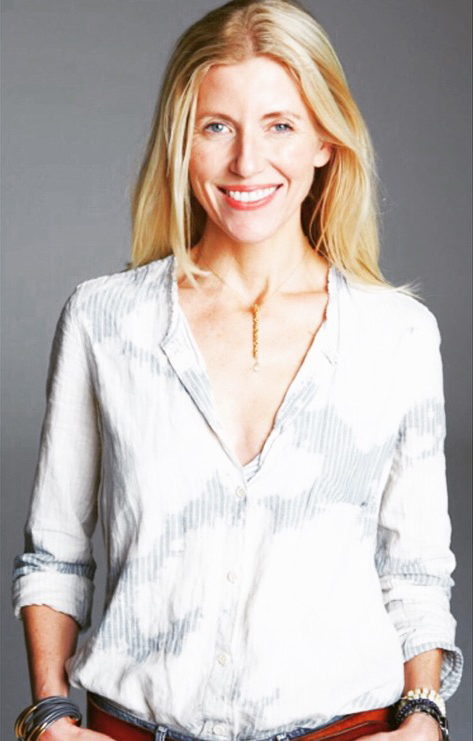
photo of Amy Swift Crosby

I’m a brand strategist and copy writer. I mostly work with partner agencies or directly with the leadership or founding team at a brand. My primary mission is to connect design and messaging solutions to business missions. I work with start-ups and Fortune 500 companies, across beauty, hospitality, wellness/fitness, CPG and retail. This blog reflects my personal writing and explores our humanity – often as it relates to work, space, time and language. You can review my portfolio here or connect with me here.

Photo - Andrew Stiles

The Brandsmiths Podcast


Brand Strategists Hilary Laffer and Amy Swift Crosby tackle business questions with candid, (mostly) serious and definitely unscripted workshopping sessions. Guests – from small business owners to CEOs, executive directors and founders – bring their head-scratchers, hunches and conundrums to Hilary, the owner of a boutique creative agency in Los Angeles, and Amy, a copy writer.

Search Posts


Latest Posts

  • The Last Time.
  • Barefoot.
  • Mileage.
  • Everything.
  • Eddy.


Copyright 2025 Amy Swift Crosby