• Home/Blog
  • Podcast
  • About
    • Contact
  • Portfolio
    • Advertising
    • Strategy
    • Taglines
    • Filmwork
  • Subscribe
  • search

Amy Swift Crosby

the story is in the telling

Machinery.

October 11, 2016 · By Amy Swift Crosby

You have more in common with the Long Island Cross Sound Ferry than you think.

We all have, and are part of, machines. For small business owners, free agents and hired guns, if the machine isn’t working, we really feel it. It’s one thing to be a Fortune 500 company and have a frayed cable or a leak, but small groups, boutique studios and entrepreneurs feel malfunctions, weaknesses, disloyalty, apathy, distraction, immaturity, inexperience, flat-lining, criticism, failed leadership, poor time management, missed opportunities, weak representation,…deeply. Our teams are our machines and when they’re squeaky or broken, we all feel the pain.

There are multiple parts, but if you’re reading this blog, you probably function in two ways: you’re the engine in one scenario (within your company) and you’re a supporting gear in another (to your client, customer, audience). When you’re the engine, it feels like you’re in a constant state of auditing/managing/driving the parts. Are they meeting deadlines? Stepping up? Generating the right thing at the right time? Are they proactive? Thoughtful? Are we doing the work we know we can do? Communicating with each other enough?

And to your client, are you listening? Delivering? Asking the right questions? Nailing the mission? Do they feel heard and successful with you?

It’s not realistic to think the team is always perfectly oiled and high-functioning. We’re humans, not wire rope and metal. But if we agree that no matter what, we’ll come to the table with not only our core talents, but a willingness to lift a little more, pull a little more, take on just a little more, then that little bit adds a bank of goodwill and productivity to the whole. Measuring and counting doesn’t generate that feeling or result.

But there has to be a baseline of agreement for that generosity to continue. And the agreement has to be that we assume the best, highest intentions of everyone involved, until proven wrong.

Even machines feel attitudes. When one really works, it’s because it not only performs, but the team/machine feels genuinely good about it.
Face Time.

October 3, 2016 · By Amy Swift Crosby

Slack me.
Skype me.
Google Hangout with me.
Text… if I don’t answer those.
Email …as a last resort.
And call me… if it’s an emergency.

This isn’t how I feel, but this is how it is. It’s the modern way we work. And it’s great, mostly, but it deceives us into some false assumptions if we aren’t careful about real time versus screen time with people.

All of us are so grateful for the connection economy that we rarely question the need to look-into-thine-eyes. The truth is that our worlds rely on this incredible world of multi-media-multi-platform communication — it’s the only way I get to live in a seaside village in Massachusetts with good schools and .03% crime, and the only way you get to do business in Colorado, India, New York, Berlin, China or San Francisco from a juice bar in LA. There’s no argument there.

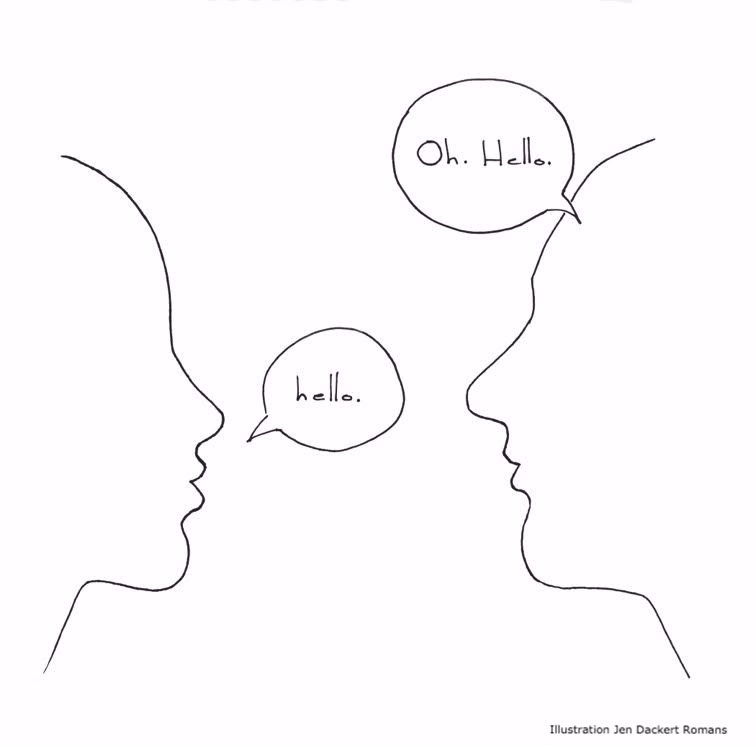
But nothing — ever — will replace or stand in for real time, together, in the same room. Not all the time. But some times.

When you don’t see your team for long enough, Feelings (capital F intentional) emerge. Stories mount. Illusions become conclusions. Tone festers. When partners / employees / stakeholders don’t spend time in the same space, they don’t relax into all the benefits of true human connection. As much as we love our agility and flexibility and our short commute from kitchen to office, we also rightfully yearn for reassurance that when I see blue, you also see blue. And, that you and I are more than just animated screens with a scope of work to perform for a check each month.

You relish and live off of the words of your lover after days or a few weeks of separation. But weeks that turn into months that turn into quarters that turn into seasons? That’s not a relationship that you’d choose — in fact if you’ve ever been there, you’ll notice that problems that were never there, or that were only a whisper, turn into a shout. Contact is curative. The same happens between work teams. We all benefit from periodic ‘touch’. The virtual workforce is a miracle and blessing, but don’t mistake it for what happens when people share air.

Make time for face time.
The airfare / cab fare / gas prices / walk down the hall …pay for themselves in a bank account of better vibes and most likely, better work.

Marriott.

September 27, 2016 · By Amy Swift Crosby

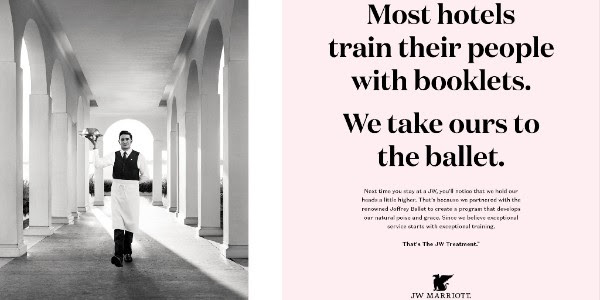
I haven’t noticed Marriott in years. When I think of that hotel chain, my brain goes to airports, insurance conferences and big plastic name tags. And they’re good at those things. But this ad, which is now running globally, disrupted that status quo for me.

The industry analysis on this campaign has been to emphasize the company’s investment in employees and celebrate a heritage of service. As we all know, when employers invest in employees, they feel motivated and committed to the work they do facing guests. But why I like it, apart from the brilliant creative by the New York agency Mother, is that exposing staff members to ballet isn’t just about witnessing culture, poise and grace — it’s about learning to embody those qualities in one’s self — physically applying those concepts and forms. This demands a relationship to your body, an awareness of the expression on your face, the nuance in the curve of a hand, attention to posture at all times — even when no one’s watching. For all the reasons we love watching a ballerina in action — and can spot one on the subway sans tutu — Marriott gifted a legion of employees with movement that feels intentional and precise, because they knew that it wouldn’t just have an impact on how a man carries a tray or the way a meal is presented — but how he is, as a man — or how she is, as a woman.

You don’t have to come to that training with mounds of self-respect / self-esteem / self-knowledge. But what you get out of that training is all of it — without the traditional focus on external service practices, “the booklet” in this case. When you teach people how to own the feeling you want to embody, not just wear a mask that looks like it, they become aware of it across all the roles they play.

You can arrive to your desk everyday, unshowered, in your pajamas with bed-head-bun, or you can get dressed, brush your hair and smell amazing — whether anyone sees you or not. Circumstance — being a waiter, a remote freelancer, a stay-at-home-mom, doesn’t dictate who you are — but how you hold yourself, treat yourself and regard yourself, tells the world everything about how you are. But mostly it tells you.

Bush.

September 20, 2016 · By Amy Swift Crosby

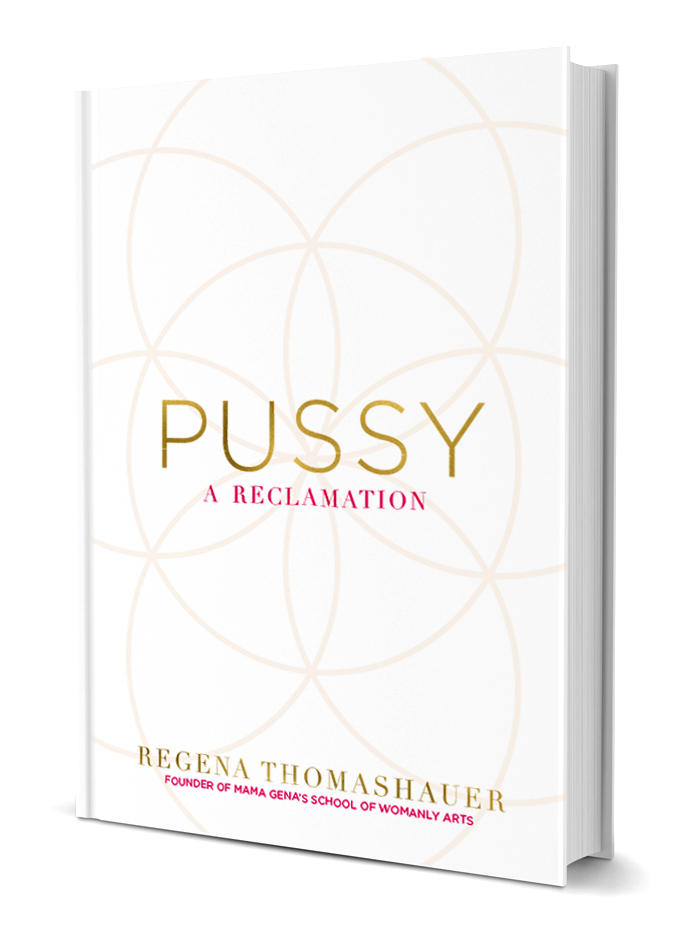
Fifteen years ago, ten years ago, five years ago…you couldn’t say this word much less print it on the cover of a respected publisher’s book cover. It was (and still is) verboten. It makes people uncomfortable, particularly women. But spend any time with Regena’s work, and all preconceptions about what it means or doesn’t mean will fall away.

But first, let’s talk pre-Pussy.

When Regena published her first book 15 years ago, I remember she went all over the morning shows, including The Today Show, and somehow (quite creatively) got around verbalizing her “hero product.” Can you imagine having to avoid the very word that anchors your professional message? The work you’ve studied and lectured on and delivered to thousands upon thousands of people across the world? Your science and teachings – censored? Asked to tip-toe around? It would be easy to blame everyone in the world for not moving your message forward.

Whether she was asked not to say it (by a producer) or chose not to say it (she wisely wanted to be invited back) —it wasn’t welcome. Alarms would have gone off. Cameramen would have fainted and executive producers would have spilled hot coffee on expensive suits. And she got that. But she didn’t get mad at that.

Regena, instead, took the long road. This is the art of restraint, of waiting, for just the right moment, of wrapping her hand around the control levers but patiently, lovingly, joyously pulling them within the environments and ecosystems where they could be digested, accepted and celebrated. When I think of Regena, through all these years, delivering hundreds of workshops, classes, talks, other books — it’s like watching her hair fly in the wind of slow, needed change, all the while quietly (and privately quite riotously) driving an entire culture forward. And despite the resistance, the shame, the push-back, and the fear — she never resorted to finger wagging or angry schoolings on why anyone/everyone was “wrong.”  This flavor of feminine doesn’t make anyone wrong.

Here, I give you, a woman who is going to blow your mind.

She will show you how to have it your way.
In your relationships.
Your sensuality.
Your business.
Your truth.

If you’re ready for that.
And it’s okay if you’re not.

But this is a party that for me started in New York City in 1999 — and isn’t stopping anytime soon. Grab the book now and get all kinds of generous bennies here.

It’s time to reclaim a few things.

Round and Round

September 13, 2016 · By Amy Swift Crosby

Going nowhere fast. Works if you're in an amusement park, but that's about it.

There’s a certain kind of answer that just makes anyone on the receiving end feel bad for asking the question, and keeps the question “in play” without actually moving the ball. It’s circular. It’s not useful. And, it’s quietly sort of mean.

It goes like this (and by the way, I’ve both done it and it has been done to me. Neither feels good.)

Q “Do you know where the blah-blah document / creative collateral / beach towels / printer ink is stored?”

A “Per my earlier note, they are stored in X / Y / Z” …OR… “See my previous email for the answer.”

This happens, obviously, because the askee feels that they have adequately provided information for the asker at an earlier time, but I think we all know what it really means. The askee wants to prove to the asker that she is lazy, stupid, annoying — or at best — forgetful.

I’m not saying it’s okay for people to be lazy and ask the same questions over and over. I would be the first to say that this is crutch of a habit by those who don’t want to do the work of looking for said missing item.

But no matter which way you spin this, even if you’re right, you’re wrong. It doesn’t move anything forward to react like this —  nothing changes except a neutral or benign feeling …turns sour.

This is particularly dangerous in small companies or teams. Let’s find a nicer way to say, “I already told you.”

The price of a little creative communication is paid back in gratitude.

Maiden Voyages

September 6, 2016 · By Amy Swift Crosby

My first carrot crop this year. Not winning any medals at the County Fair. #goodtry

Remember way back when? You were new at that thing you do, and you made mistakes, but you corrected them, and then after a while you had surges of confidence when someone said “good job,” and you felt amazing, and then right after that, like the next day, you made humbling fumbles where you felt like an idiot and were embarrassed to be in the same room with yourself?

Ah, to be a virgin again (professionally speaking.) It may be hard to remember, but those pendulum swings that were frequent early on, become less and less as you mature into your talent. A certain stability in your output reassures you that you’re good, if not really good, and your stuff makes people happier / wealthier / more effective — in their own worlds — without much error. So you forget about those days. Because mostly work is good/great-ish.

But something can happen, it happened to me this year, where suddenly some of your regular game becomes unpredictable. You get curve balls thrown, the rug gets pulled out, you think this but really it’s that. It’s not devastating necessarily, although it could be, but what can feel like a sh&t show might really just be virgin territory — a growth spurt. You haven’t done this — like this — before. Maybe you haven’t structured a deal like this, or worked with a client…like this, or taken on a role…like this.  Or had a partner…like this. Or found your own company in a particular position — like this — until now.

Stepping up or out, or even just new relationships/processes/risks, has reminded me of what it feels like to be new at something again. There have been frustrations. And joys. But that pendulum has been back — after years at a steady pace. It’s uncomfortable.

Privately, I’ve condemned  myself for not being better, smoother, less emotional. Maybe you, too, have wondered how you got here. And mistakenly, you think you’ve regressed.

But ease up. I’ve got a campaign going on myself right now where I just say, “calm the __ down” when I feel that uncertainty. I agree, not that poetic — but it works for me. Consider that the movement you feel is likely not reverse — but, in fact, 5th gear.

The cool thing… about doing a new thing/feeling/situation/circumstance, is it either opens a new door, which means new territory, full of potential – or – gives you information about why you won’t do it again. You get to decide.

Doesn’t have to be your-amazing-everything or your failed-whatever. Don’t give it more weight than that.  You don’t know how it fits into your future until you have time to digest where it fits into your past.

Calm The F$&K Down. It’s gonna be okay.

Newer Posts
Older Posts

Portfolio Categories

  • Advertising
  • Strategy
  • Taglines
  • Filmwork

Shortlist of Clients

  • Bulgari
  • B&H Photography
  • GUESS
  • PepsiCo
  • Proctor & Gamble
  • The Class by Taryn Toomey
  • Barre3
  • Mandarin Oriental
  • Sur LaTable

Big and small, start-ups and icons.

Subscribe

[insta-gallery id=”1″]

About Me

photo of Amy Swift Crosby

I’m a brand strategist and copy writer. I mostly work with partner agencies or directly with the leadership or founding team at a brand. My primary mission is to connect design and messaging solutions to business missions. I work with start-ups and Fortune 500 companies, across beauty, hospitality, wellness/fitness, CPG and retail. This blog reflects my personal writing and explores our humanity – often as it relates to work, space, time and language. You can review my portfolio here or connect with me here.

Photo - Andrew Stiles

The Brandsmiths Podcast


Brand Strategists Hilary Laffer and Amy Swift Crosby tackle business questions with candid, (mostly) serious and definitely unscripted workshopping sessions. Guests – from small business owners to CEOs, executive directors and founders – bring their head-scratchers, hunches and conundrums to Hilary, the owner of a boutique creative agency in Los Angeles, and Amy, a copy writer.

Search Posts


Latest Posts

  • The Last Time.
  • Barefoot.
  • Mileage.
  • Everything.
  • Eddy.


Copyright 2025 Amy Swift Crosby